Finding bed bugs in your home can be stressful. Once you know they are there, the next question is usually simple: What is the best way to get rid of them?
Two common professional options are heat and chemical treatments. Both can control bed bugs, but they work in different ways. One method may be better for a certain home, while another may make more sense for a different infestation.
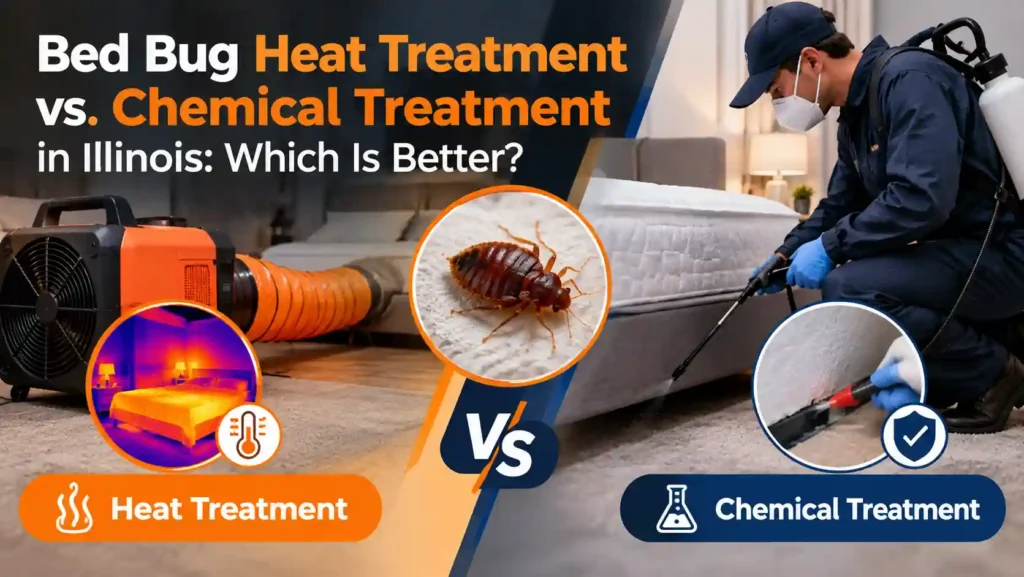
If you are comparing Bed Bug Heat Treatment vs. Chemical Treatment in Illinois: Which Is Better?, the answer depends on how serious the infestation is, where the bugs are hiding, your property layout, and whether follow-up treatment is needed.
This guide explains both methods in simple terms so you can understand the differences before choosing a Pest control Illinois treatment plan.
What Is Bed Bug Heat Treatment?
Professional heat treatment raises the temperature inside an affected room or property to levels that bed bugs cannot survive.
Special heating equipment warms the room while technicians monitor temperatures in different areas. The goal is to make sure heat reaches mattresses, furniture, cracks, and other places where bed bugs may be hiding.
A bed bug heat treatment Illinois homeowner chooses can target bed bugs at different life stages, including eggs, when the required temperature reaches the hiding areas for enough time.
Heat is different from simply turning up your thermostat. Home heating systems are not designed to create the controlled temperatures needed for bed bug treatment. Using space heaters, fireplaces, or other DIY heating methods can also create serious safety risks.
How Does Heat Treatment for Bed Bugs Work?
During professional heat treatment for bed bugs, specialized heaters and air-moving equipment are used to increase and distribute heat through the treatment area.
Technicians may place temperature sensors throughout the space to make sure heat reaches difficult areas.
This is important because bed bugs often hide deep inside:
Mattress seams, box springs, bed frames, headboards, couches, chairs, furniture joints, baseboards, cracks, and other small spaces close to where people rest.
The EPA notes that professional heat can be an effective bed bug control method when performed correctly. Bed Bug Control Services in Illinois may use heat as part of a professional treatment plan. Heat does not leave a pesticide residue behind, so preventing bed bugs from being brought back into the property is still important after treatment.
Is Heat Treatment Effective for Bed Bugs?
A common question from homeowners is, is heat treatment effective for bed bugs?
Yes. Professional heat can be highly effective when the entire treatment area reaches the required temperature and stays there long enough.
One of its main benefits is that heat can affect both active bed bugs and eggs without depending on insects walking across a treated surface later.
However, success depends on proper equipment, preparation, monitoring, and access to the affected areas.
Items that cannot safely handle high temperatures may need to be removed or treated in another way. Heat also has no lasting residual effect. If new bed bugs are brought into the home after treatment, the previous heat treatment will not protect against them.
What Is Chemical Bed Bug Treatment?
A bed bug chemical treatment Illinois service uses products labeled for bed bug control in targeted areas where the insects hide or travel.
Depending on the treatment plan, products may be applied to cracks, crevices, baseboards, furniture areas, bed frames, and other suitable locations.
The EPA has registered hundreds of pesticide products for bed bug control. Different pesticide classes work in different ways, which is one reason a professional treatment plan may use more than one control method.
Chemical treatment does not mean spraying every surface inside the home. Proper bed bug control involves careful inspection and targeted application according to product labels.
How Does Chemical Treatment for Bed Bugs Work?
Professional chemical treatment for bed bugs usually begins with an inspection.
The technician looks for live insects, eggs, shed skins, dark spotting, and common hiding places.
Treatment is then directed to suitable areas where bed bugs are active or likely to travel.
Some products can continue working after the initial application. This residual action can be useful because hidden bed bugs may come into contact with treated areas later.
However, chemical treatment may require more than one visit. Eggs can be difficult to reach, and some insects may remain hidden during the first treatment.
The EPA recommends using pesticides as part of a broader bed bug control strategy rather than relying on a single product or method.
Heat Treatment vs. Chemical Treatment: What Is the Difference?
Both methods can be useful, but the main differences involve speed, residual protection, preparation, cost, and the type of infestation being treated.
| Factor | Heat Treatment | Chemical Treatment |
| Treatment approach | Raises temperatures throughout affected areas | Applies targeted bed bug control products |
| Bed bug eggs | Can kill eggs when proper temperatures are reached | May require follow-up treatment depending on product and egg location |
| Speed | Often treats a larger area in one treatment session | May involve several scheduled visits |
| Residual effect | No residual protection | Some products may continue working after application |
| Preparation | Heat-sensitive items may require special handling | Preparation depends on products and treatment areas |
| Cost | Often higher upfront | Often lower upfront |
| Best fit | Can suit widespread or difficult infestations | Can work well for targeted or less widespread activity |
Neither option is automatically better in every situation.
A careful inspection should come before deciding which method makes the most sense.
What Are the Advantages of Heat Treatment?
Heat has several benefits for bed bug control.
One important advantage is its ability to reach many areas of a room at the same time. When temperatures are properly controlled, heat can affect insects hiding inside furniture, mattresses, and small gaps.
It can also target multiple bed bug life stages during the same treatment.
Heat can be useful when bed bug activity is spread across a room or when bugs are hiding in many difficult locations.
Another advantage is that heat does not depend on leaving insecticide residues throughout the treated area.
For homeowners who want a faster treatment approach, professional heat may be worth discussing with an exterminator.
What Are the Limitations of Heat Treatment?
Heat is not the right choice for every property.
The biggest limitation is usually cost. Specialized heaters, sensors, equipment, and labor can make professional heat treatment more expensive upfront.
Some belongings may also need special preparation. Heat-sensitive electronics, medications, pressurized containers, candles, and other items may need to be handled according to the pest professional’s preparation instructions.
Heat also provides no residual protection after treatment. A new bed bug brought home in luggage, clothing, furniture, or another item can start a new infestation.
This makes prevention and monitoring important after treatment.
What Are the Advantages of Chemical Treatment?
Chemical treatments can provide a more targeted approach.
A professional can treat cracks, crevices, furniture areas, and other locations where bed bugs are found.
Some products also provide residual activity. This means bed bugs that were hidden during the original application may later cross a treated surface.
Chemical treatments can also have a lower starting cost than whole-room heat treatment.
For smaller or more localized infestations, this approach may provide a practical option.
What Are the Limitations of Chemical Treatment?
The main limitation is that treatment may take longer.
Bed bugs hide extremely well, and eggs may be protected inside small cracks or other difficult areas.
For this reason, follow-up visits and monitoring may be required.
Bed bugs can also develop resistance to some insecticides. The EPA notes that using different pesticide modes of action can help reduce resistance concerns.
Homeowners should also avoid repeatedly spraying store-bought products without a clear plan. More pesticide does not automatically mean better control.
Which Is the Best Treatment for Bed Bugs?
There is no single best treatment for bed bugs in every situation.
Heat may make sense when an infestation is widespread and fast whole-area treatment is useful.
Chemical treatment may make sense when activity is more limited or when a targeted approach with residual control is preferred.
In some situations, professionals may use an integrated approach that combines inspection, heat, steam, targeted products, vacuuming, monitoring, encasements, or other methods.
The EPA describes this type of Integrated Pest Management approach as an effective way to address bed bugs using several control tools rather than relying on one method alone.
The right choice should be based on what is actually happening inside the property.
How Serious Is Your Bed Bug Infestation?
Treatment should start with understanding the size of the problem.
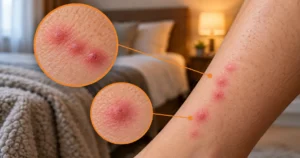
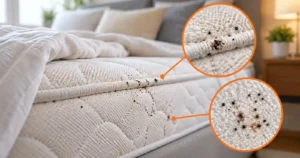
Bed bugs often hide close to where people sleep or sit for long periods. Common warning signs include dark spotting on mattresses, shed skins, eggs, live bugs, and small reddish stains.
Bites can be another warning sign, but bites alone cannot confirm bed bugs.
If you are unsure what you are seeing, our guide to Signs of Bed Bugs in Illinois explains the common evidence to look for around beds and furniture.
An early infestation may require a different approach than bed bugs that have already spread into several rooms.
How Much Does Bed Bug Heat Treatment Cost in Illinois?
The bed bug heat treatment cost Illinois property owners may face can vary because no two infestations are exactly the same.
Price can depend on:
The size of the treatment area, number of affected rooms, severity of the infestation, property layout, amount of preparation required, and treatment method.
Heat treatment often has a higher upfront price because professional heating equipment and temperature monitoring are required.
Chemical treatments may start at a lower price, but multiple visits can affect the final cost.
For a closer look at local pricing factors, see How Much Does Bed Bug Treatment Cost in Illinois.
Chicago property owners can also review Bed Bug Extermination Cost in Chicago for information focused on Chicago homes and apartments.
Can You Treat Bed Bugs Yourself?
Some steps can help reduce bed bug activity, but established infestations can be difficult to eliminate without professional help.
Drying suitable clothing and bedding on high heat can kill bed bugs and eggs in those items. Vacuuming and reducing clutter may also help with inspection and control.
However, DIY whole-room heating should not be attempted with fireplaces, propane heaters, or household space heaters. The EPA warns that these approaches may be ineffective and can create fire hazards.
Bug bombs should not be used as the only bed bug treatment either. They often fail to reach the cracks and crevices where bed bugs hide.
If activity continues after basic steps, professional inspection is usually the safer next move.
When Should You Call a Professional Bed Bug Exterminator?
Consider professional help when you find live bed bugs, eggs, shed skins, repeated dark spotting, or activity in more than one room.
You should also consider calling when DIY efforts have not stopped the problem.
A bed bug exterminator Illinois homeowner contacts should inspect the property before deciding on a treatment approach.
That inspection helps answer important questions:
Where are the bugs hiding?
How far have they spread?
Is one room affected or several?
Would heat, chemical treatment, or a combined approach make more sense?
This avoids choosing a treatment simply because it sounds stronger or cheaper.
Professional Bed Bug Treatment in Illinois
Choosing professional bed bug treatment Illinois services can remove much of the guesswork from the process.
Perfect Pest Control LLC provides bed bug inspection and treatment services in Illinois and offers treatment plans based on the location and extent of activity.
If bed bugs have been confirmed in your property, you can learn more about Bed Bug Control Services in Illinois.
For other household pest problems, visit Pest control Illinois to explore additional pest control options.
How Can You Reduce the Risk of Bed Bugs Returning?
Successful treatment is only part of bed bug control.
Bed bugs can be carried into homes on luggage, clothing, furniture, and personal belongings.
After traveling, inspect luggage and keep bags away from beds and upholstered furniture until they have been checked.
Be careful with secondhand furniture. Check seams, cracks, joints, and fabric folds before bringing an item indoors.
Keeping sleeping areas less cluttered can also make future inspections easier.
If you want to understand why these pests enter bedrooms and sleeping areas, read What Attracts Bed Bugs in Illinois.
You can also learn about the role of visual hiding preferences in What Colors Are Bed Bugs Attracted To?.
Heat or Chemical Treatment: Which Should You Choose?
The better option depends on your infestation.
Heat may be attractive when bed bugs have spread through a larger area and you want a treatment that reaches multiple hiding places during the same service.
Chemical treatment can be useful when activity is more localized or when residual control is an important part of the treatment strategy.
Sometimes, combining methods makes more sense than choosing only one.
That is why inspection matters.
Instead of guessing which treatment you need, have the property checked and choose a plan based on the actual infestation.
Need Help Choosing a Bed Bug Treatment in Illinois?
If you have found bed bugs or signs of an infestation, Perfect Pest Control LLC can inspect the affected areas and help determine an appropriate treatment plan.
Whether heat treatment, targeted applications, or a combined strategy makes more sense depends on your property and the level of activity.
Call Perfect Pest Control LLC at (630) 447-9777 to discuss your bed bug problem and schedule an inspection.
Getting the infestation properly identified first can help you avoid wasting time and money on a treatment that does not match the problem.
Frequently Asked Questions
Is heat better than chemicals for bed bugs?
Not always. Heat can work well for widespread infestations because it can treat many hiding places at once. Chemical treatments can provide targeted and residual control. The better option depends on the infestation and property.
Can bed bug heat treatment kill eggs?
Yes. Properly performed professional heat treatment can kill bed bug eggs when the required temperature reaches them and is maintained for enough time.
Does chemical treatment kill bed bug eggs?
Some products and treatment strategies can affect eggs, but chemical control often requires follow-up because eggs or hidden insects may survive the first application. This is why inspection and monitoring are important.
Is one heat treatment enough for bed bugs?
A properly completed treatment may control an infestation in one treatment session, but no professional should assume every property will have the same result. Monitoring afterward is important because heat has no residual effect.
Is chemical bed bug treatment safe?
EPA-registered pesticides are evaluated for their labeled uses. They should always be applied according to label directions. Professional technicians can explain any preparation and re-entry instructions that apply to the products being used.
Should I use heat or chemical treatment for an Illinois apartment?
It depends on the extent of activity, building layout, neighboring-unit risk, and where the bed bugs are hiding. Multi-unit properties can be more complicated, so professional inspection is especially useful before selecting a treatment.