
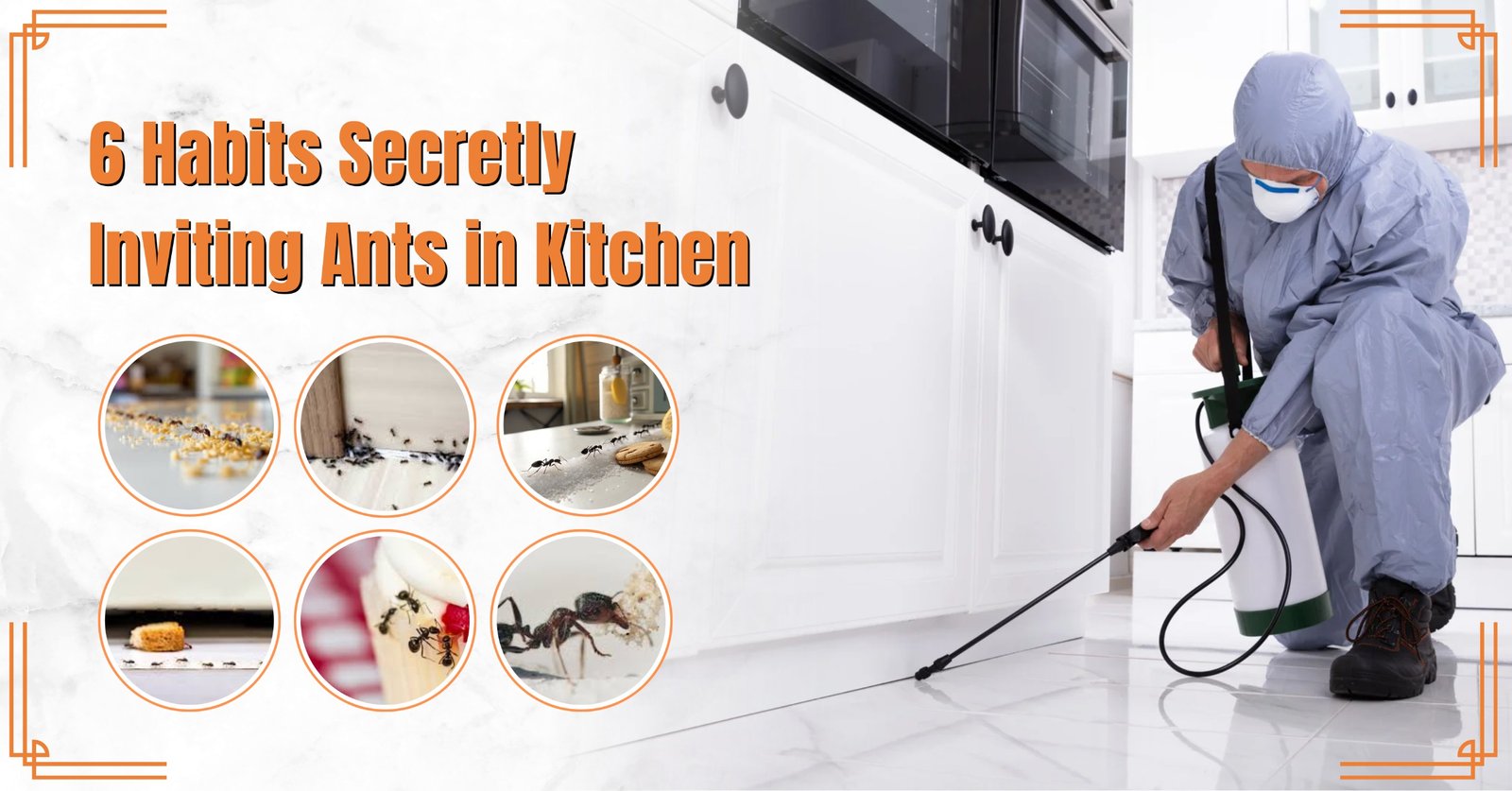
6 Habits Secretly Inviting Ants in Kitchen | Hanover IL
Ants in the kitchen again right after you cleaned? Everyday kitchen habits that attract ants leave scent trails and crumbs they can’t resist. That’s why ants keep coming back, especially on warm, humid days in Hanover Park, IL.
If you’re looking for ways to get rid of ants in the kitchen without relying on harsh sprays, start by paying attention to your daily habits. Even the smallest food particles or spills can invite ants inside, making it essential to stay mindful of what’s left behind.
Why You’re Seeing Ants in the Kitchen
Ants don’t wander at random. Scout ants search for moisture and sugars, then lay pheromone trails that guide the colony straight to your counters. That’s why ants keep coming back even after a quick wipe-down. Small residues juice film, cereal dust, pet food, damp sponges act like beacons. Warm, humid weather in Hanover Park, IL boosts activity, and tiny entry gaps around pipes or baseboards make access easy.
Quick identifiers:
Here’s how to spot the most common ants that invade kitchens
- Odorous house ants: Follow long, well-organized trails to sweets and moisture; when crushed, they release a “rotten coconut” odor.
- Often nest in wall voids or under sinks after rain; respond well to slow-acting sugar gel baits placed along trails.
- Pavement ants: Build small soil mounds along sidewalks, driveways, and slab cracks, then enter through gaps at baseboards or pipes.
- Prefer greasy/sugary crumbs; steady bait placement near entry points works better than repellent sprays.
Key takeaway: If you’re seeing ants in the kitchen specially in Illinois, the real trigger is routine residue + moisture + open entry points—not “dirty” floors. Fix those, and you’ll get rid of ants in the kitchen far more effectively than with random sprays.
1) Crumbs & Sticky Spills = Ant Magnets
Tiny sugar films and cereal dust are enough to trigger ants in kitchen. Scout ants map pheromone trails along edges, backsplashes, toe-kicks, and under small appliances so even a “clean” counter can keep feeding a trail. This is one of the most common kitchen habits that attract ants in Hanover Park, IL homes.
Quick Fix (60-second routine):
Wipe the counter edges where crumbs lodge, the stove front, and the table rim; then do a fast sweep along baseboards. Slide the toaster/coffee maker once a week and clear the “shadow line” beneath.
Pro Tip:
- Use a damp microfiber with a drop of dish soap; then dry the surface.
- Clean first, then place bait near trails for how to get rid of ants in the kitchen without pushing them elsewhere.
| Habit | Why It Attracts Ants | Quick Fix (keyword-optimized) |
| Crumbs & sticky spills | Sugar films guide scout ants via pheromone trails | Nightly edge wipe + quick sweep; dry surfaces to cut ants in kitchen trails |
2) Overnight Dishes & Damp Sponges
Overnight dishes are classic kitchen habits that attract ants. Moist food film and a damp sponge refresh pheromone trails a big reason why ants keep coming back.
Quick fix:
Load and run the dishwasher before bed. If you hand-wash, stand dishes to air-dry, then wipe and dry the sink basin. This routine erases trails and is the safest start to how to get rid of ants in the kitchen.
Pro tips:
- If soaking is unavoidable, scrape plates first, add hot water, and cover the pot.
- Squeeze sponges dry and store in a vented holder so they don’t stay damp.
- After wiping, rinse with plain water and dry surfaces before placing gel bait.
- Set bait near active paths (never on food areas) to intercept scouts.
| Habit | Why It Attracts Ants | Quick Fix (keyword-optimized) |
| Overnight dishes & damp sponges | Moist food film and damp sponges refresh scent paths | Run dishwasher before bed; air-dry dishes; wipe and dry sink smart start for how to get rid of ants in the kitchen |
3) Unsealed Food & Fruit Bowls
Open cereal boxes, snack bags, and ripe fruit broadcast scent one of the most common kitchen habits that attract ants in Illinois. Even a loose chip clip leaks odor that keeps trails returning.
Quick fix:
Move ripe fruit to the fridge and decant snacks, cereals, and baking supplies into airtight, gasket-seal containers. Wipe sticky jars (honey, jam, syrup) and their shelf bin weekly to prevent ants in the kitchen naturally.
Pro tips:
- Use clear containers so an unseated lid is obvious at a glance.
- Park sugary jars on a washable tray; rinse the tray during your weekly clean.
- Keep coffee and sugar canisters fully closed; wipe rims before sealing.
| Habit | Why It Attracts Ants | Quick Fix (keyword-optimized) |
| Unsealed food & fruit bowls | Open sugars and ripe fruit broadcast odor and keep trails active | Airtight containers; refrigerate ripe fruit; wipe sticky jars to prevent kitchen ants naturally |
4) Pet Bowls & Loose Trash Lids
Residue around pet dishes and sweet trash odors keep trails active, another kitchen habit that attracts ants. Trails often run under mats and along baseboards, which is why ants keep coming back after you clean places like Hanover Park, IL
Quick fix:
Lift bowls after meals, wipe the feeding zone, and use tight-sealing trash and recycling lids. Rinse sticky cans and pouches before they go in the bin to prevent ants in the kitchen naturally.
Pro tips:
- Place bowls on a shallow, washable tray; rinse the tray nightly.
- Set an evening reminder for “bowls up” so food isn’t left out overnight.
- Keep bins a few feet from warm appliances that amplify odors.
- If trails appear, clean first, then set gel bait near the path (never on food areas).
| Habit | Why It Attracts Ants | Quick Fix (keyword-optimized) |
| Pet bowls & loose trash lids | Residue around bowls and sweet trash odors draw foragers | Lift bowls after meals; clean feeding zone; sealed trash/recycling lids; rinse cans and pouches |
5) Leaks, Damp Sinks & Wet Recycling
Constant moisture refreshes scent paths. A slow drip, a wet sink left overnight, or unrinsed bottles gives scouts both water and residue key reasons why ants keep coming back even after you tidy up.
Quick fix:
Repair leaks, wipe and dry the sink basin at night, and give cans and bottles a quick rinse before they hit the bin. Keep the area under the sink ventilated to prevent kitchen ants naturally.
Pro tips:
- Check for swollen particleboard or dark stains inside the cabinet signs of a drip.
- Add desiccant packs or a small vent to lower humidity under the sink.
- Elevate the dish rack so water doesn’t pool beneath it.
- If a trail is active, clean first, then place gel bait near the path not on prep areas.
| Habit | Why It Attracts Ants | Quick Fix (keyword-optimized) |
| Leaks, damp sinks & wet recycling | Constant moisture refreshes trails and supports nesting nearby | Fix drips; dry sink basin nightly; quick-rinse bottles/cans; ventilate under-sink cabinet |
6) Ignoring Entry Points
Tiny gaps around pipes, windows, and baseboards act like open doors. Trails slip through utility cutouts and door bottoms, then follow edges, one reason why ants keep coming back even after a deep clean.
Quick fix:
Seal gaps with caulk, add weatherstripping, and install a door sweep if you see daylight. Trim plants that touch siding and check slab or foundation cracks to prevent kitchen acts naturally.
Pro tips:
- Use painter’s tape to mark every gap you notice at night; seal them in one session.
- Inspect under-sink plumbing cutouts and cable holes common trail hubs.
- Vacuum baseboards before sealing so caulk adheres cleanly.
- Recheck after heavy rain or thaw; shifting can reopen hairline cracks.
| Habit | Why It Attracts Ants | QuickFix (keyword-optimized) |
| Ignoring entry points | Gaps at pipes, baseboards, and doors act like open doors | Caulk and weatherstrip; add door sweeps; trim plants; inspect slab/foundation cracks |
How to Erase Ant Trails | Before You Bait
Ant trails are scent highways. Scouts mark pheromone trails that pull more workers to food and moisture, which is why ants keep coming back. Clearing those paths first boosts any bait you use and is the smartest start to how to get rid of ants in the kitchen.
Quick fix:
To erase pheromone trails, wipe paths with a 50/50 vinegar–water mix, then a drop of dish soap in warm water, followed by a clean rinse. Dry the area completely before any bait goes down.
Pro tips:
- Target edge zones: backsplash grout, toe-kicks, baseboards, under small appliances.
- Use fresh clothes so you don’t re-spread scent.
- Skip strong repellents on the trail; they can scatter foragers and slow baiting.
- Place gel bait near the cleaned path once it’s dry (never on prep areas).
On natural stone, use mild dish soap + water instead of vinegar to avoid etching.
Bait vs. Spray in the Kitchen
If you’re comparing ant bait vs spray in kitchen, bait wins for colony control. Sprays knock down what you see, but they can scatter trails and contaminate food areas. Gel or station baits let workers carry the active ingredient back to the nest, solving the source instead of the surface.
Quick fix:
Clean and dry the trail first. Then place small dots of gel or discreet bait stations along edges and entry points not on prep surfaces. Avoid using repellent sprays near the trail; if a spray is needed, keep it off counters and focus away from food zones. This pairing makes getting rid of ants in the kitchen faster and safer.
Pro tips:
- Place bait beside, not on, the path; think backsplashes, toe-kicks, and baseboards.
- Don’t wipe right over bait—spot clean around it and let it work for several days.
- Rotate sugar vs. protein baits if activity stalls; some species switch preferences.
- Keep stations out of reach of kids and pets; follow the product label exactly.
Skip strong scents on active trails; they reduce bait pickup and spread scouts.
When comparing ant bait vs spray in the kitchen, bait is usually better for colony-level control, while sprays are for limited, off-counter spot work.
| Method | What it Does Well | Trade-offs | Best Use | Safety Notes |
| Gel/Station Bait | Reaches the nest via foragers; works with trails | Slower results (hours–days) | Along edges and entry points after cleaning trails | Keep off prep areas; follow label; let bait sit undisturbed |
| Contact/Repellent Spray | Fast knockdown on visible ants | Can scatter trails; little colony impact | Targeted spots away from food zones (baseboards, exterior) | Avoid counters; overuse can reduce bait pickup |
Bottom line: Clean and dry the path first, then place bait beside the trail. Use minimal spray away from food areas only if needed. This approach is the safest, most reliable way for how to get rid of ants in the kitchen.
Prevention Checklist
Small, steady habits stop trails from reforming that’s why ants keep coming back less often when you stay consistent. Use this checklist to support how to get rid of ants in the kitchen without overusing sprays.
| Frequency | Action |
| Daily | Edge-wipe counters and stove front; quick sweep at baseboards |
| Dry the sink basin and rack after dishes | |
| Lift pet bowls after meals; wipe the feeding area | |
| Empty crumb trays under toaster/air fryer | |
| Every 2–3 days | Rinse sticky recycling; take out trash before it smells |
| Weekly | Slide small appliances; clean the “crumb line” underneath |
| Check entry points and touch up caulk/weatherstripping | |
| Refresh bait stations near historic trails (don’t spray over them) | |
| After rain/heat | Inspect under-sink and exterior door sweeps; dry damp spots |
When DIY Isn’t Enough | Hanover Park, IL
If trails keep returning or you’re seeing swarms from wall voids, it’s time for ant control Hanover Park IL from a licensed pro. A technician can identify species, locate nests, and use targeted baits that work faster and safer than guesswork.
Call a professional if you notice:
- Large, persistent trails after cleaning and baiting
- Activity after rain or heat waves, especially near outlets or baseboards
- Ants emerging from cracks, under-sink plumbing, or window frames
- Pets or kids limit where you can place bait safely
Why Perfect Pest:
At Perfect Pest we inspect entry points, place pro-grade gel/station baits, and set a short follow-up window. That’s the most reliable path for how to get rid of ants in the kitchen long-term.
Ready for help? Book an Appointment for ant exterminator in Hanover Park visit today same-area scheduling and food-safe treatment options available.
Conclusion
Ants keep returning because of tiny residues, moisture, and easy entry points not “dirty floors.” For kitchen ants in Illinois (especially Hanover Park, IL), break the cycle with daily edge wipes and a dry sink, seal food and gaps, and place slow-acting gel baits beside trails; if activity persists, book professional ant control in Hanover Park, IL for safe, long-term relief.