Waking up with itchy red marks is stressful. Finding a tiny dark spot on your sheets can make it worse. Many Illinois homeowners and renters want a clear answer fast, and that starts with knowing how to identify bed bugs in your Illinois home.
This guide explains the early signs of bed bugs in plain language. You will learn what the bugs, eggs, and stains look like, where they hide, and how to check a room safely. You will also learn when it is time to ask a professional for help.
Why Bed Bugs Are So Easy to Miss
Bed bugs are small, flat, and very good at hiding. They stay out of sight during the day. They come out at night, often while people sleep, to feed on blood. Because of this, many people never see a live bug until the problem has grown.
Bed bugs also do not mean a home is dirty. They travel on luggage, clothing, used furniture, and bags. A clean house in Chicago, Naperville, or Hanover Park can get them just as easily as any other home. Knowing what to look for helps you act early, before the problem spreads to other rooms.
Adult Bugs, Young Bugs, and Shed Skins
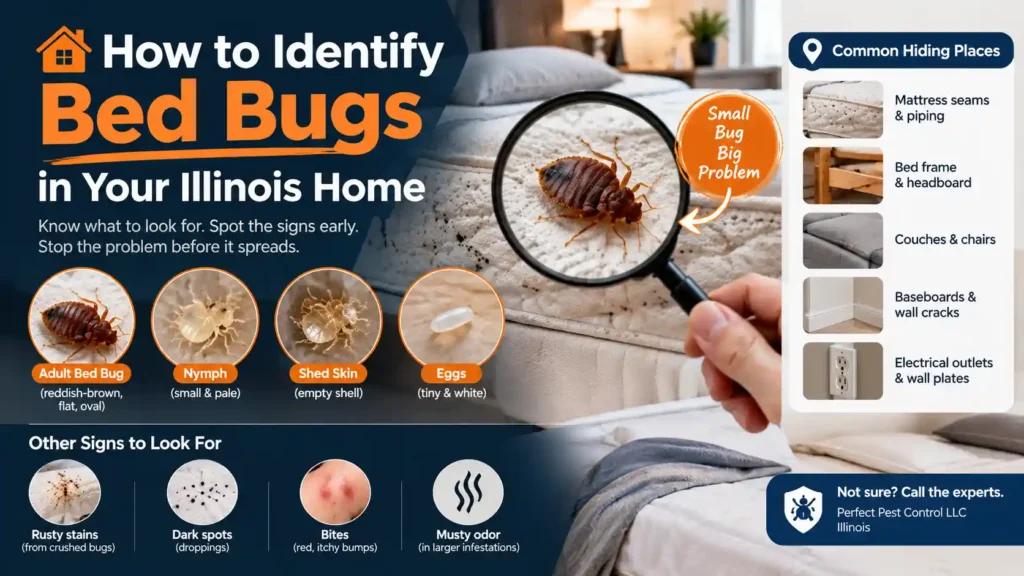
So, what do bed bugs look like? Adult bed bugs are about the size of an apple seed. They are flat, oval, and reddish-brown. After a meal, they look rounder and darker. They have six legs and no wings.
Young bed bugs, called nymphs, are smaller. They are pale or almost see-through until they feed, and then they look reddish. This makes them very hard to see on light sheets. As nymphs grow, they shed their skins. These empty shells are light brown and shaped like the bug. Finding them is a strong clue that bed bugs are living nearby.
How to Recognize the Eggs
Bed bug eggs are tiny, about the size of a pinhead. They are pale white or cream colored and shaped a bit like a grain of rice. Females lay them in small groups in tight, hidden spots, and the eggs stick in place with a sticky coating.
Good bed bug eggs identification takes a flashlight and patience. Check seams, folds, and cracks, not open surfaces. A magnifying glass helps. If you find tiny white specks that do not brush away easily, take a clear photo. A photo can help a technician confirm what you found.
Stains, Spots, and Smells on Your Bedding
Your mattress often shows the first proof. The most common signs of bed bugs on a mattress are small rusty stains, tiny dark dots, and shed skins along the seams and piping. The rusty stains may come from bugs crushed during sleep. The dark dots are waste.
Waste marks are another useful clue. Bed bug droppings on sheets look like tiny ink dots from a felt-tip pen. They often smear when wiped with a damp cloth, which helps tell them apart from dirt or crumbs. You may also see them on pillowcases and mattress tags.
In bigger infestations, some people notice a sweet, musty odor in the bedroom. Not everyone can smell it, so do not rely on odor alone.
Common Hiding Places in Your Home
People often ask where do bed bugs hide besides the mattress. The answer is almost anywhere close to where you sleep. Bed bugs like tight cracks that keep them hidden but still near their food source.
Start with the bed. Check mattress seams, the box spring, the bed frame joints, and the headboard. Then look at nearby spaces such as nightstands, baseboards, loose wallpaper, electrical outlet covers, and the edges of carpets. Couches, recliners, and curtains can also hold bugs, especially where people rest or sleep.
In apartments and multi-unit buildings, bed bugs can move through wall gaps and shared pipes. That is why a neighbor’s problem can become yours.
A Simple Room Check You Can Do Tonight
Wondering how to check for bed bugs without special tools? You only need a bright flashlight, a plastic card, and about 20 minutes. Work slowly and stay calm.
Strip the bed first. Seal the sheets in a bag and take them straight to the washer. Wash them hot and dry them on high heat. Then look along every seam and fold of the mattress. Run the edge of the card through the seams to push out anything hiding there. Next, lift the box spring and check the underside and the fabric near the frame.
Move to the headboard, the nightstand, and the wall behind them. Look inside drawers and under lamp bases. Then check the couch and chairs if you sit there often. Write down what you find and where you find it. These notes will help if you need professional help later.
Bites Can Point to a Problem, but They Prove Little
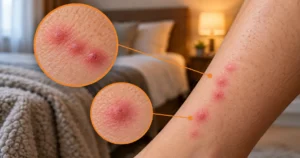
Bites are the clue that sends many people searching online. They often show up as small, red, itchy bumps in a line or cluster on skin that is exposed during sleep, such as arms, neck, and shoulders. But bites alone cannot confirm anything. Some people do not react at all, and other insects cause similar marks.
So how to tell if you have bed bugs comes down to combining clues. A bite pattern plus stains, shed skins, or a live bug gives you a much stronger answer. Together, these bed bug infestation signs paint a reliable picture.
If you want a deeper list of early warnings, read our guide on Signs of Bed Bugs in Illinois. It walks through what to watch for in the first weeks and shows how early clues can build into a larger problem.
Other Pests That Can Look Like Bed Bugs
Not every small bug in the bedroom is a bed bug. Fleas are smaller, jump, and are often tied to pets. Carpet beetles are round and spotted, and their larvae look fuzzy. Bat bugs look almost the same as bed bugs, but they live near bats in attics and walls. Booklice and ticks can also cause confusion.
A bed bug moves slowly and does not jump or fly. It also stays close to where people rest. If you cannot tell what you found, tape it to a white card or place it in a sealed container. Then show it to a technician. A correct identification saves time and keeps you from treating the wrong pest.
What Draws Bed Bugs Into a Home
Bed bugs do not need mess or crumbs. They need people to feed on and places to hide. Travel is a big reason they spread. Hotels, public transit, shared laundry rooms, and used furniture can all carry them. To understand the risk factors in more detail, read about What Attracts Bed Bugs in Illinois.
Color is a common question too. Research suggests bed bugs pick dark red and black hiding spots more than white or yellow ones. Still, color is not a cause or a cure. Changing your bedding will not stop an infestation. You can learn more in our post on What Colors Are Bed Bugs Attracted To?
Simple Habits That Lower Your Risk
You cannot make a home bed bug proof, but a few habits help. When you travel, keep your suitcase off the bed and away from upholstered chairs. Check the hotel mattress seams before you unpack. When you return, wash your clothes on hot and dry them on high heat right away.
Be careful with used furniture, especially mattresses and couches. Inspect every seam and joint before you bring anything inside. In shared laundry rooms, carry clean clothes home in a sealed bag. A mattress cover with a zipper can also remove many hiding spots and make later checks much easier.
Finally, keep the bedroom tidy. Clutter does not cause bed bugs, but it gives them more places to hide and makes inspections harder. Regular checks every few weeks, especially after travel or guests, help you catch a small problem before it grows.
When It Is Time to Call a Professional
If you find live bugs, eggs, or repeated stains, it is time to get expert help. Do-it-yourself sprays can push bed bugs deeper into hiding, which makes the problem harder to fix. A trained technician knows where to look and how to confirm what you have.
A good bed bug inspection Illinois homeowners rely on starts with a full check of sleeping areas and nearby furniture. The technician looks for live bugs, eggs, shed skins, and waste. Then they explain what they found and what happens next. With a professional bed bug inspection Illinois residents can book, you get a clear answer instead of guessing.
If bed bugs are confirmed, treatment comes next. Perfect Pest Control LLC offers Bed Bug Control Services in Illinois for homes and businesses. The right plan depends on how far the problem has spread, the layout of the home, and how much clutter is present. Strong bed bug control Illinois residents can count on usually includes a careful inspection, targeted treatment, and a follow-up plan.
What Treatment May Cost
Cost is the next question for most families. Price depends on the size of the home, the number of rooms affected, and the treatment method. Clutter can add to the work needed too. If you live in the city, you can review Bed Bug Extermination Cost in Chicago for local pricing guidance.
For a wider look, see How Much Does Bed Bug Treatment Cost in Illinois. An inspection comes first because no honest price can be given without seeing the home.
How to Prepare Before the Technician Arrives
A little prep makes the visit smoother. Do not move items from the infested room to other parts of the house, because that can spread bugs. Bag clothing and linens and wash them on hot when you can. Clear clutter from the floor and around the bed so the technician can reach seams and baseboards.
Keep pets and children out of the work area until the technician says it is safe. Ask what the treatment plan includes, how long you should stay out of the room, and whether a follow-up visit is needed. Clear answers to these questions help you feel in control during a stressful time.
Get Help From Perfect Pest Control LLC
Bed bugs are stressful, but you do not have to handle them alone. Perfect Pest Control LLC is based in Hanover Park and serves homes across Illinois, including Chicago and nearby suburbs. We offer free inspections and a clear explanation of what we find. If you need reliable Pest control Illinois families can call, our team is ready to help. Call (630) 447-9777 today to talk about what you are seeing.
Bed Bug Identification FAQs
Can I see bed bugs during the day?
Sometimes, but not often. They prefer to stay hidden in seams and cracks until night. In larger infestations, daytime sightings are more likely.
Are bites the only way to know I have bed bugs?
No. Many people do not react to bites at all. Stains, shed skins, eggs, and live bugs are more reliable clues than skin marks.
Do bed bugs mean my home is dirty?
No. Bed bugs hitchhike on bags, clothes, and used items. Clean and cluttered homes can both get them.
Can bed bugs live in couches and chairs?
Yes. They can hide in the seams and frames of any furniture where people sit or rest, not just in beds.
Should I throw away my mattress right away?
Not always. In many cases a mattress can be treated. Ask a technician before you discard anything, since moving infested items can spread bugs.