The signs of a rodent infestation are often easy to miss at first. You may hear a light scratching sound behind a wall, notice a few small droppings under the sink, or find a food package with a tiny hole. These clues can seem minor, but they may point to mice or rats living somewhere inside your home. Illinois homeowners dealing with these warning signs can learn more about Pest Control Illinois options if the activity continues.
Rodents often stay hidden in walls, basements, garages, attics, cabinets, crawl spaces, and storage areas. This means you may see evidence before you ever see the animal itself. If you are already finding fresh droppings, nesting material, or chewing damage, professional Rodent Removal Services in Illinois can help identify where rodents are entering and where they are active. Perfect Pest Control LLC lists rodent inspection, removal, sanitation, exclusion, and monitoring as parts of its Illinois rodent service.
This guide explains the most common warning signs, the differences between mouse and rat activity, where rodents usually hide, and when a problem may need professional attention.
What Are the Most Common Signs of a Rodent Infestation?
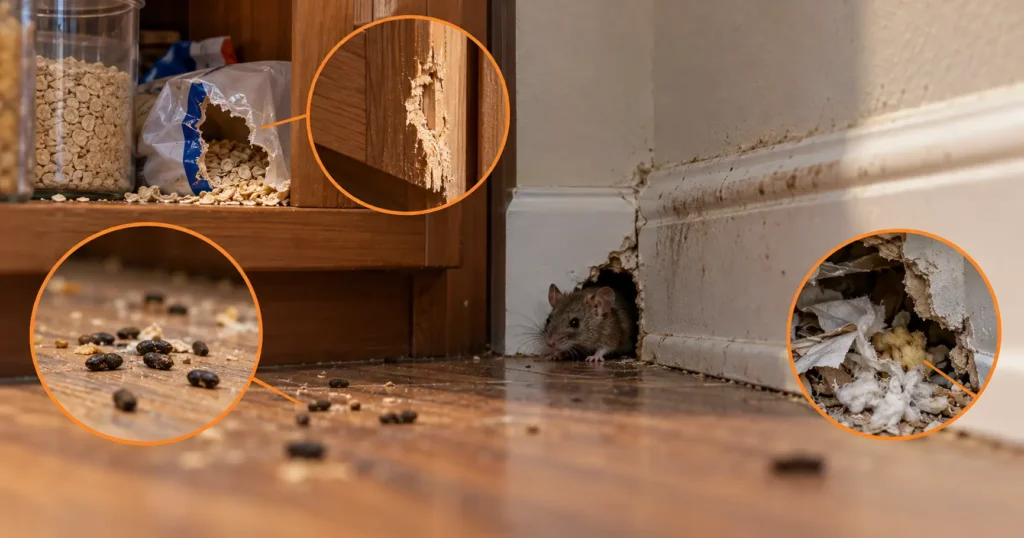
The most common rodent infestation signs include droppings, chewing damage, scratching sounds, nesting material, damaged food packages, strong odors, and sightings of live or dead rodents.
One sign by itself does not always prove that you have a large infestation. However, several warning signs in the same part of your home are more concerning.
For example, if you find droppings under the kitchen sink and also hear scratching behind the cabinets at night, there may be active rodents nearby.It is also important to look at whether the evidence is fresh.
New droppings, fresh chew marks, or repeated noises usually deserve more attention than old signs that have not returned.
1. Rodent Droppings Around Your Home
Finding rodent droppings in house areas is one of the strongest signs that mice or rats may be active.
Droppings are commonly found in places where rodents search for food or travel regularly. Check kitchen cabinets, pantries, drawers, storage rooms, garages, basements, and areas behind appliances.
You may also find waste along walls because rodents often follow protected edges rather than crossing large open spaces.
Fresh droppings may look darker and softer than older ones. Older waste can become dry and dull.Do not pick up rodent droppings with bare hands.
Avoid sweeping or vacuuming dry waste without using proper cleanup methods, because contaminated material can create health concerns.
If droppings continue appearing after safe cleanup, that usually means the activity is ongoing.
2. Signs of Mice in the House
Common signs of mice in house areas include small droppings, light scratching sounds, tiny gnaw marks, shredded nesting material, and food packages with small holes.
Mice can live very close to people without being seen.
They often hide behind cabinets, inside wall gaps, under appliances, in attics, and inside storage areas.Because mice are small, they can enter through narrow openings around pipes, doors, foundations, vents, and utility lines.
If you notice several small clues in the same part of the property, inspect nearby hiding areas carefully.A mouse sighting during the day should also be taken seriously when other signs are present.
3. Signs of Rats in the House
The signs of rats in house areas can look similar to mouse activity, but the evidence is often larger.
Rat droppings are usually bigger than mouse droppings. Their chewing damage may also be heavier.
You may find disturbed insulation, larger holes, chewed containers, damaged wood, or burrows near the exterior of the property.Rats may also produce louder movement inside walls, ceilings, crawl spaces, or basements.
If you hear heavy movement or notice larger droppings around garbage areas, food storage spaces, or utility rooms, rats may be involved.
4. Mouse Droppings in the House
Mouse droppings in house areas are commonly found near food, nesting sites, and travel paths.They may appear inside drawers, cupboards, closets, or behind kitchen appliances.The location can help you understand where mice are moving.
For example, droppings under a sink may suggest activity near plumbing openings. Droppings behind a refrigerator may indicate that mice are using the wall edge as a travel route.Check nearby areas for entry holes, chewed material, or shredded paper.
Do not assume that removing the droppings solves the problem. If the mice are still inside, new waste may appear.
5. Scratching Noises Inside Walls at Night
Hearing scratching noises in walls at night is another common warning sign.
Rodents are often easier to hear when the home becomes quiet.You may notice scratching, chewing, light running, or scurrying inside walls or ceilings.The sound may come and go.
In some cases, you may hear activity near the kitchen because rodents are moving toward food.In other homes, sounds may come from attics, garages, or basements.
One noise does not always mean rodents. However, repeated sounds from the same part of the home should be investigated.
Perfect Pest Control’s Illinois rodent page also lists scratching in walls as a common reason homeowners seek professional service.
6. Rodent Gnaw Marks
Fresh rodent gnaw marks may appear on food packages, cabinets, wood, cardboard, plastic containers, insulation, or other materials.Mice and rats chew regularly.
The damage may look like rough edges, small holes, or repeated bite marks.Pay close attention to chewing around pantry items and storage containers.Rodents can also damage building materials or other household items.If you find new chewing in several areas, try to identify the path between those locations.It may lead toward a nest or an entry point.
7. Rodent Nests Inside the Home
A rodent nest in house areas may be made from shredded paper, fabric, insulation, cardboard, or other soft materials.Nests are usually built in quiet, protected places.
Possible locations include wall voids, attics, storage areas, boxes, cabinets, furniture, and spaces behind appliances.A nest may be difficult to see until you move stored items.
If you find shredded material grouped together in an unusual location, inspect the area for droppings or chewing.Do not handle a suspected nest with bare hands.
8. Damaged Food Packaging
Rodents are often attracted to easy food sources.Chewed food bags, torn cereal boxes, damaged pet food packages, and small holes in stored products can be warning signs.Look closely around the damaged item.You may find crumbs, droppings, or gnaw marks nearby.Food that may have been contaminated by rodents should not be eaten.
Once the area is cleaned, store food in sealed containers that rodents cannot easily chew through.Reducing access to food helps make the property less attractive.
9. Strong or Unusual Odors
Rodents may leave urine and waste along areas they use regularly.A strong, stale, or musky smell can develop in hidden spaces where activity is concentrated.
You may notice the odor near cabinets, wall voids, appliances, attics, or storage areas.A bad smell alone does not confirm a rodent problem.Plumbing issues, moisture, mold, and other household problems can create similar odors.Use smell as one clue and check for physical evidence such as droppings or chewing.
10. Tracks and Grease Marks
Mice and rats often follow the same routes.In dusty areas, you may notice small tracks.Rats may also leave dark rub marks along walls where their bodies repeatedly touch the same surface.Look along baseboards, storage-room walls, garage edges, and basement areas.Rodents usually prefer protected paths.That is why many signs appear along walls instead of in the middle of a room.
11. Small Holes and Entry Points
Rodents need a way to enter.Check for openings around pipes, foundations, vents, doors, windows, utility lines, roof areas, and garage doors.A small gap may be enough for a mouse.
Rats usually need more space, but they can still use gaps that do not look large to a homeowner.
Finding a possible entry point is important because trapping rodents without sealing access can allow new animals to enter later.A long-term plan should address both current activity and future access.
How to Tell If You Have Mice
If you are wondering how to tell if you have mice, look for several small clues together.Small droppings are one sign.Light scratching sounds are another.
You may also notice tiny holes in food packaging, shredded nesting material, or small chew marks.Start your inspection in kitchens, pantries, garages, basements, and storage areas.Look behind appliances and inside lower cabinets.Mice often use protected areas close to food and water.
If new evidence continues appearing after cleaning and trapping, you may have more than one mouse or an entry point that has not been sealed.
How to Tell If You Have Rats
Knowing how to tell if you have rats involves looking for larger evidence.
Rat droppings, burrows, heavy chewing damage, larger entry holes, and louder movement may all point to rat activity.Rats may be found near garbage storage areas, foundations, basements, garages, crawl spaces, or outdoor feeding areas.Check the exterior of the home as well as the interior.
Look for disturbed soil, holes near the foundation, or activity near sheds and other structures.When the evidence is difficult to identify, a professional inspection can help determine what species is present.
Mouse Infestation Signs vs. Rat Infestation Signs
Mouse infestation signs are usually smaller.Droppings, chew marks, tracks, and entry holes tend to reflect the animal’s small size.Mouse movement may also sound lighter.
Rat infestation signs are often more obvious because rats are larger.You may notice bigger droppings, heavier chewing, stronger sounds, or outdoor burrows.However, homeowners do not always need to identify the exact species before taking action.
Repeated rodent evidence is enough reason to inspect the property closely.
If you are trying to understand the species commonly found around local properties, the topic Common Types of Rodents Invading Homes and Businesses in Illinois can also support your research.
Why Do Rodents Enter Illinois Homes?
Rodents usually enter because a property offers food, water, warmth, or shelter.Illinois weather can also influence rodent behavior.As outdoor conditions change, mice may seek protected indoor spaces.itchens, garages, basements, attics, crawl spaces, and storage rooms can all provide shelter.
Open food, pet food, trash, water leaks, clutter, and structural gaps can make a property easier for rodents to use.A rodent problem is not always caused by poor housekeeping.Even a clean home can develop an infestation if mice or rats find a suitable entry point.
Are Rodents Dangerous in a Home?
Rodents can create sanitation and property concerns.They may contaminate surfaces and stored food.They can also damage materials through chewing.Droppings, urine, nesting material, and dead rodents should be handled carefully.The larger the infestation, the more contamination may be present.This is why homeowners should avoid ignoring repeated evidence.
Where Do Rodents Usually Hide?
Mice and rats prefer places where they can stay protected from people.Common hiding areas include walls, cabinets, attics, garages, basements, crawl spaces, furniture, storage boxes, ceilings, and utility areas.
Perfect Pest Control’s Illinois rodent page specifically mentions attics, crawl spaces, basements, and wall voids as common hidden areas where rodents may nest and multiply.The location of the evidence often gives you the best clue.If droppings appear in kitchen cabinets, inspect nearby wall and plumbing gaps.If sounds are coming from the attic, check roof and soffit areas.
How to Inspect Your Illinois Home for Rodents
Begin in the area where you first noticed a problem.Use a flashlight.Check behind appliances, inside cabinets, under sinks, around storage boxes, and along walls.
Look for droppings, chew marks, shredded materials, tracks, holes, and damaged food.Then inspect the exterior.Check the foundation, garage door, vents, utility lines, pipes, roof edges, and door gaps.The goal is to answer two questions.Where are the rodents active?How are they getting inside?If you cannot answer both questions, professional inspection may be useful.
What Should You Do if You Find Droppings?
Do not ignore rodent waste.Keep children and pets away from the contaminated area.Avoid handling the waste with bare hands.Use proper rodent-cleanup guidance rather than simply sweeping dry droppings around the room.After cleanup, monitor the area.If new droppings appear, rodents may still be active.
Repeated evidence is one of the strongest reasons to move from basic DIY steps to a more complete control plan.
Can You Handle a Small Rodent Problem Yourself?
Some small problems may respond to trapping, sanitation, and exclusion.The key is to deal with more than the rodent you see.You should also remove easy food sources and find entry gaps.If you trap one mouse but leave an opening near a pipe or garage door, another may enter later.
DIY efforts become less practical when signs appear in several rooms, rodents continue returning, or activity is hidden inside walls.
Why Rodent Exclusion Matters
Exclusion means closing the openings that rodents use to enter the property.It is an important part of long-term rodent control.Common areas include gaps around utilities, foundations, doors, vents, roof edges, and pipes.
Sealing entry points helps reduce the risk of new rodents entering after the current infestation is removed.
Perfect Pest Control lists sealing door sweeps, vents, utility gaps, foundation cracks, soffit holes, and garage openings as part of its rodent-exclusion approach.
Rodent Removal vs. Rodent Control
Homeowners sometimes use removal and control as if they mean exactly the same thing.They are related, but the focus can be different.
Rodent removal focuses on getting existing mice or rats out of the property.Rodent control is broader. It can include removing current rodents while also addressing entry points, shelter, food sources, sanitation, and monitoring.
Perfect Pest Control explains this difference in its guide to Rodent Removal vs Rodent Control in Illinois.For recurring problems, the broader approach is usually more useful than dealing only with the animal you can see.
When Do You Need Professional Rodent Removal?
Some rodent problems become difficult to handle without help.Repeated droppings are one warning.Ongoing scratching behind walls is another.
You should also consider professional inspection when traps are not solving the problem, activity appears in several rooms, or you cannot find where rodents are entering.
Perfect Pest Control’s guide on Signs You Need Professional Rodent Removal in Illinois explains that repeated droppings, fresh gnawing, damaged food packages, nesting material, odors, and recurring activity are reasons to investigate further.You do not need to wait until you see several rodents running through the home.Early inspection can make it easier to identify where the activity started.
What Happens During Professional Rodent Control?
A professional visit should usually begin with an inspection.
The technician looks for droppings, nests, damage, travel routes, and entry points.
The inspection may include kitchens, garages, basements, attics, crawl spaces, utility openings, storage areas, and exterior gaps.The next step depends on what is found.Treatment may involve traps, targeted control, sanitation recommendations, exclusion work, and follow-up monitoring.
A good plan should address both the active rodents and the reason they entered.
How Much Does Rodent Control Cost in Illinois?
Homeowners often want to know the cost before booking service.The answer depends on the infestation.
Property size, rodent species, number of affected areas, entry-point repairs, cleanup, and follow-up visits can all change the price.
Perfect Pest Control’s current guide, How Much Does Rodent Control Cost in Illinois?, says many standard services fall around $150 to $600, while severe infestations, exclusion work, or cleanup can cost more. These figures are estimates rather than fixed quotes.The best way to understand your actual cost is to inspect the property first.
A small mouse problem in one area may require far less work than rats spread through walls, a basement, or several rooms.
How to Make Your Home Less Attractive to Rodents
Begin with food storage.Keep dry food and pet food in secure containers.
Clean crumbs and spills.Keep trash closed.Do not leave pet food out longer than needed.Then reduce hiding areas.Remove unnecessary clutter from storage spaces.
Inspect cardboard boxes before moving them.Keep garages and basements organized enough that new droppings or gnawing can be noticed quickly.Finally, check the outside of the property for possible entry gaps.
Prevention works best when sanitation and exclusion are used together.
When Should Illinois Homeowners Act?
You should act when several warning signs appear together or when the same evidence keeps returning.A single old dropping in a garage may not tell you much.Fresh droppings every morning, new chewing damage, and repeated wall sounds are much more concerning.
You should also act when signs appear in more than one room.This may mean rodents are using several parts of the structure.The sooner you understand the extent of the problem, the easier it is to choose the right next step.
Get Help With a Rodent Problem in Illinois
The signs of a rodent infestation should not be ignored when they keep returning.
If you continue finding droppings, hearing scratching sounds, seeing damaged food packages, or noticing fresh chewing after basic DIY steps, a professional inspection can help locate the source.
Perfect Pest Control LLC provides rodent services for homes and businesses across parts of Illinois and the Chicagoland area. Its rodent service page lists inspection, removal, sanitation, exclusion, and follow-up monitoring as parts of the process.
Call Perfect Pest Control LLC at (630) 447-9777 to discuss the signs you are seeing and arrange an inspection.
Finding the entry point and the areas of active rodent movement can help you deal with the cause of the problem rather than only the visible evidence.
Frequently Asked Questions
What are the first signs of a rodent infestation?
The first signs of a rodent infestation often include small droppings, scratching sounds, damaged food packaging, gnawing, nesting material, or unusual odors. You may notice these signs before seeing a live rodent.
Does seeing one mouse mean I have an infestation?
Not always. However, seeing one mouse indoors means it found a way into the property. Check nearby areas for droppings, nesting material, gnawing, and entry holes.
Where do mice usually hide during the day?
Mice often stay in quiet areas such as walls, cabinets, attics, garages, basements, storage spaces, and behind appliances.
Why am I hearing scratching in my wall at night?
Rodents may become easier to hear when the home is quiet. Repeated scratching, chewing, or running sounds from the same area can indicate activity inside a wall or ceiling.
Should I call a professional if traps are not working?
Yes, especially if fresh signs keep appearing. Failed traps may mean the rodents are traveling somewhere else, have another food source, or continue entering through an unsealed opening.
How can I keep rodents from returning?
Reduce food and water sources, keep storage areas organized, seal possible entry gaps, and monitor places where activity was found before. Long-term prevention works best when exclusion is combined with good sanitation.