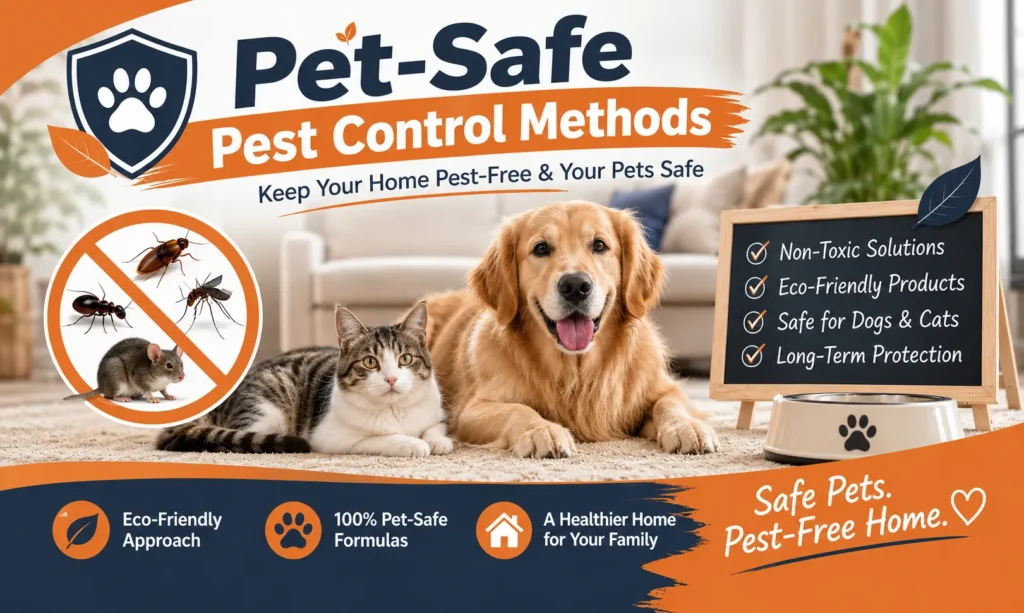
Sharing your home with a dog, cat, or other animal means every decision about pest control comes with an extra question: is this safe for my pet? Traditional insecticides and rodenticides can be effective against ants, roaches, fleas, and rodents, but many contain chemicals that pose real risks to curious noses, paws, and tongues. That’s why more homeowners across the United States are searching for pet safe pest control methods that eliminate pests without putting animal companions in harm’s way.
This guide breaks down what pet-safe pest control actually means, how it works, what regulations govern it, and how to avoid the costly mistakes many DIY homeowners make. Whether you’re dealing with a flea infestation, ants in the kitchen, or rodents in the attic, you’ll leave with a clear Pest Control Illinois plan for protecting both your home and your pets
What Are Pet-Safe Pest Control Methods?
Pet-safe pest control refers to treatment methods, products, and strategies specifically formulated or applied in a way that minimizes toxicity risk to cats, dogs, and other household animals, while still effectively managing pest populations. This isn’t a marketing label — it’s a practical standard that considers active ingredients, application methods, drying/re-entry times, and placement of traps or baits.
Unlike conventional treatments, which often rely on broad-spectrum synthetic pesticides, pet-friendly pest solutions prioritize:
- Lower-toxicity or plant-derived active ingredients
- Targeted application (cracks, crevices, bait stations) instead of broad spraying
- Physical and mechanical controls (traps, barriers, exclusion)
- Products independently reviewed for residential and animal safety
The goal isn’t just “chemical-free” — it’s risk-managed. A trained technician can sometimes use EPA-registered products safely around pets when applied correctly, while an untrained DIY application of the same product could create real danger. This distinction matters enormously when comparing options.
Types of Pet-Friendly Pest Solutions
There isn’t a single pet-safe method — it’s a toolkit. Homeowners typically combine several of the following:
1. Botanical and Plant-Based Repellents
Essential oil-based formulas using cedarwood, peppermint, or clove oil are common in natural pest control products. They work primarily as repellents rather than killers, making them useful for ants, spiders, and mosquitoes in low-to-moderate infestations.
2. Diatomaceous Earth (Food-Grade)
This fine powder dehydrates insects like ants, roaches, and bed bugs on contact. Food-grade diatomaceous earth is widely considered safe when kept out of a pet’s direct food and water areas.
3. Flea and Tick Prevention Products
Flea and tick prevention designed with pets in mind includes veterinarian-approved topical treatments, oral medications, and yard-safe insect growth regulators (IGRs) that interrupt the flea life cycle without relying on heavy pesticide spraying indoors.
4. Beneficial Insects
Introducing beneficial insects such as nematodes, ladybugs, or predatory mites is an increasingly popular biological control strategy, especially for lawns and gardens. Nematodes, for example, target flea larvae and grubs in soil without harming pets that walk or play on treated grass.
5. Mechanical Exclusion and Traps
Sealing entry points, using snap traps instead of poison bait for rodents, and installing door sweeps reduce reliance on chemicals entirely — a strategy pest management professionals frequently recommend as the first line of defense.
How Pet-Safe Products and Approaches Work
Understanding the mechanism behind pet-safe pest control helps explain why it’s effective — and where its limits are.
- Repellents disrupt an insect’s sensory receptors, driving pests away from treated zones rather than killing on contact.
- Desiccants like diatomaceous earth physically damage an insect’s exoskeleton, causing dehydration — a mechanical rather than chemical kill, which is part of why it’s considered low-risk for mammals.
- IGRs (Insect Growth Regulators) interrupt reproduction and development cycles, reducing pest populations over weeks rather than instantly.
- Bait stations enclose toxic bait inside tamper-resistant housing so pests can access it, but paws and noses cannot.
- Biological controls use natural predator-prey relationships already present in ecosystems, requiring no synthetic chemicals at all.
Most licensed pest management professionals combine two or three of these approaches into an Integrated Pest Management (IPM) plan — a strategy increasingly recommended by the EPA for both efficacy and safety.
Regulations and Safety Standards in the United States
In the U.S., pesticide products are regulated at the federal level by the Environmental Protection Agency (EPA) under FIFRA (Federal Insecticide, Fungicide, and Rodenticide Act), which requires registration, labeling, and safety data for any product sold for pest control. Labels legally must disclose whether a product is toxic to domestic animals and specify any required re-entry intervals.
States, including Illinois, layer additional licensing requirements on top of federal rules. Pest control technicians must typically be certified through state agriculture departments, and commercial applicators are required to follow label instructions exactly — deviating from label directions is itself a violation of federal law, regardless of intent.
For pet owners, the practical takeaway is simple: always check that a product is EPA-registered, read the label for pet-specific warnings, and when in doubt, hire a licensed pest management professionals team rather than improvising with off-label DIY combinations.
Risks, Costs, and Mistakes to Avoid
Even well-meaning pet owners make errors that can turn a pest problem into a pet health emergency. Common DIY pest control mistakes include:
- Overusing essential oils. “Natural” doesn’t mean risk-free — concentrated essential oils like tea tree oil are toxic to cats even in small amounts.
- Using dog flea products on cats. Certain permethrin-based canine flea treatments are highly toxic to cats and a leading cause of pet poisoning calls.
- Placing rodent bait in open areas. Anticoagulant rodenticides are a major cause of secondary poisoning in dogs that eat treated rodents or bait directly.
- Ignoring re-entry times. Applying a product and letting pets back into the area before it fully dries or settles increases exposure risk.
- Mixing multiple treatments. Combining sprays, foggers, and granules without understanding ingredient interactions can compound toxicity.
Cost-wise, DIY pet-safe products (diatomaceous earth, bait stations, repellents) typically run $15–$60 per treatment, while professional IPM-based service plans range from $100–$300 depending on infestation severity and property size. The higher upfront cost of professional Rodent Removal Services in Illinois often pays off by avoiding repeat treatments, property damage, or veterinary bills from an accidental exposure..
Comparing Conventional and Eco-Friendly Methods
| Factor | Conventional Pest Control | Pet-Safe / Eco-Friendly Methods |
| Speed of results | Fast, often immediate | Moderate, may take days to weeks |
| Pet exposure risk | Higher without careful handling | Lower when applied correctly |
| Cost | Often lower per treatment | Comparable to slightly higher |
| Environmental impact | Can affect soil and water | Generally lower impact |
| Best for | Severe infestations | Prevention and moderate infestations |
In practice, the best results usually come from a hybrid approach: targeted, professionally applied treatments for active infestations, paired with ongoing pet-friendly pest solutions for prevention and maintenance.
Protect Your Pets With Trusted Pest Control Solutions
Choosing pet-safe pest control isn’t about avoiding effective treatment — it’s about choosing the right treatment, applied correctly, by people who understand both pest biology and animal safety. If ants, fleas, rodents, or other pests have made themselves at home, don’t risk a DIY mistake that could harm the animals you’re trying to protect.
Our team offers trusted, pet-conscious pest control across the region. If you’re dealing with an infestation locally, explore our Pest Control Illinois services, connect with a licensed Illinois exterminator for a same-week inspection, or ask about our humane, pet-safe rodent removal services in Illinois. Contact us today for a free consultation and a treatment plan built around your home — and your pets.
Frequently Asked Questions
Is pet-safe pest control actually effective against serious infestations? Yes, when applied as part of an integrated pest management plan by trained technicians. For severe infestations, professional pet-safe treatments combine targeted application with monitoring for lasting results.
Are essential oil pest repellents safe for cats? Not always. Many essential oils, including tea tree and citrus oils, are toxic to cats even in small doses. Always confirm a product is labelled safe for feline households before use.
How long should pets stay away from a treated area? This depends on the specific product label, but a general rule is to keep pets away until the treated area is fully dry and any listed re-entry interval has passed.
What’s the safest way to handle flea and tick prevention for multi-pet households? Use species-specific, veterinarian-approved products, and never apply a dog-formulated treatment to a cat. Combine with IGR-based yard treatments for long-term prevention.
Should I hire a professional or try DIY pet-safe pest control first? For minor issues, DIY methods like diatomaceous earth or beneficial insects can work well. For recurring or large-scale infestations, a licensed pest management professional reduces both risk and long-term cost.