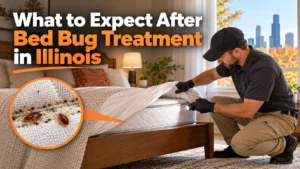
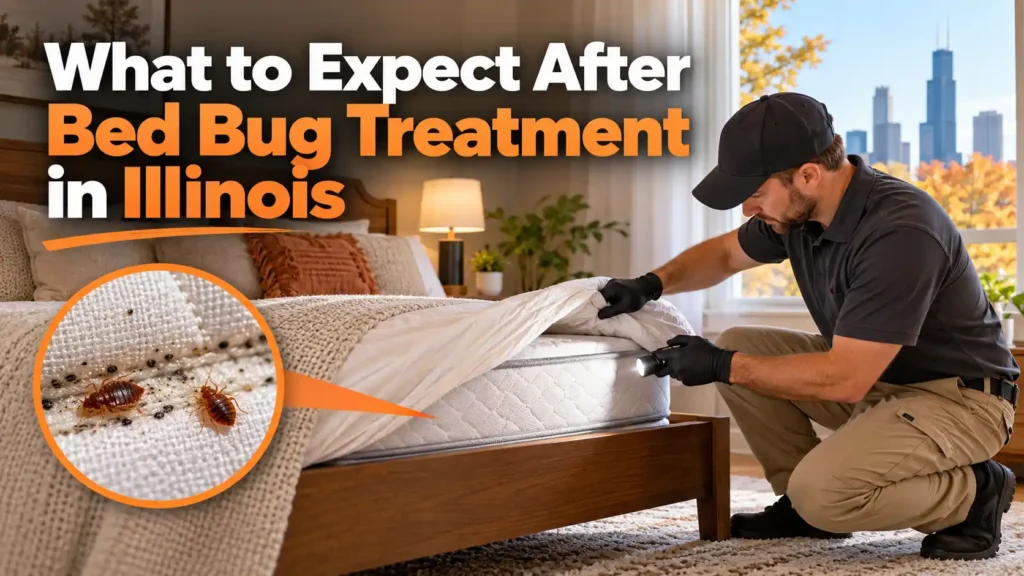
After bed bug treatment, homeowners should expect a period of monitoring, careful cleaning, and possibly follow-up inspections before the infestation is considered fully controlled. Depending on the treatment method, some insects may die immediately, while others may take longer to disappear. Following your exterminator’s instructions is essential for protecting the results and preventing further problems.
Understanding what to expect after bed bug treatment helps Illinois homeowners avoid mistakes that could interfere with the extermination process. Questions about returning home, sleeping in a treated bedroom, cleaning furniture, and recognizing surviving insects are common after professional pest control.
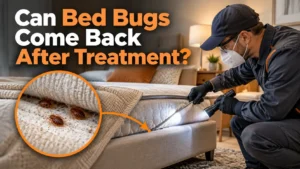
Can Bed Bugs Come Back After Treatment? Yes, bed bugs can return if insects or eggs survive, untreated hiding places remain, or new bed bugs enter the property through luggage, furniture, or belongings. However, seeing an occasional insect shortly after certain treatments does not automatically mean the entire service has failed.
This guide explains what happens after bed bug extermination, how to care for treated areas, what warning signs to watch for, and when professional follow-up may be necessary.
What Happens Immediately After Bed Bug Treatment?
The first few hours after professional bed bug treatment are important because the property may have specific re-entry, ventilation, and cleaning requirements. These instructions depend on whether the exterminator used chemical applications, heat, steam, or a combination of methods.
Chemical treatment may involve products that remain active on selected surfaces after application. These residual treatments can help control bed bugs that leave their hiding places later. Professional heat treatment works differently because it uses controlled temperatures to kill insects and eggs when the necessary conditions are achieved throughout the affected locations.
Once the technician finishes, ask which areas should remain undisturbed and whether additional inspections are scheduled. Avoid moving furniture, washing treated surfaces, or introducing potentially infested items until you understand the instructions.
Homeowners comparing treatment methods can review Bed Bug Heat Treatment vs. Chemical Treatment in Illinois for information about their differences and limitations.
What to Do After Bed Bug Treatment
Knowing what to do after bed bug treatment can make the recovery process easier and reduce the chance of accidentally spreading surviving insects.
Start by following the written aftercare instructions from your pest control provider. The technician should explain when you can return to treated areas, which surfaces can be cleaned, and how to handle clothing, bedding, and furniture.
Avoid carrying potentially infested belongings into rooms that were not affected by the original infestation. Bed bugs can travel inside bags, folded fabrics, upholstered furniture, and other personal items. Moving these belongings without proper containment can introduce insects into new hiding places.
Keep your treatment documentation and record any new sightings. If you notice live bed bugs, take a clear photograph or capture a specimen in a sealed container. This information can help the exterminator assess whether the treatment is progressing as expected.
Professional inspection is especially important in apartments and multifamily buildings, where bed bugs may move between connected units.
How Long After Bed Bug Treatment Is It Safe to Return Home?
The question how long after bed bug treatment is it safe to return home depends on the products and methods used. There is no universal re-entry time that applies to every bed bug treatment.
After chemical applications, residents and pets may need to remain outside treated areas until the products have dried and all pesticide label requirements have been met. Some treatments involve additional ventilation or occupancy restrictions.
Professional heat treatment may require a different waiting period. Although heat does not leave a chemical residue by itself, furniture, floors, and other surfaces may remain dangerously hot immediately afterward. The technician should confirm that the property has cooled sufficiently before anyone returns.
Never assume a home is safe to enter simply because chemical odors are no longer noticeable. The correct decision should always follow the product label and treatment provider’s instructions.
If your exterminator did not explain re-entry requirements, contact the company before entering the treated space.
Can You Sleep in Your Bed After Bed Bug Treatment?
Many homeowners wonder can you sleep in your bed after bed bug treatment, particularly when the infestation was discovered around a mattress or headboard.
In many situations, sleeping in your usual bed is appropriate after the exterminator confirms the room is safe for normal use. Continuing to use the bedroom may also help avoid spreading insects into other sleeping areas.
However, you should never sleep on bedding or mattress surfaces that are subject to pesticide re-entry or contact restrictions. Ask your technician whether the mattress, box spring, bed frame, and surrounding furniture are ready for use.
Bed bug-resistant mattress encasements may be recommended to reduce hiding places and make future inspections easier. These covers should fit properly and remain sealed according to their manufacturer’s instructions.
If you are unsure where insects may still be hiding, the guide Where Do Bed Bugs Hide During the Day in Illinois Homes? explains the most common locations around mattresses, headboards, bed frames, and furniture.
Is It Normal to See Bed Bugs After Treatment?
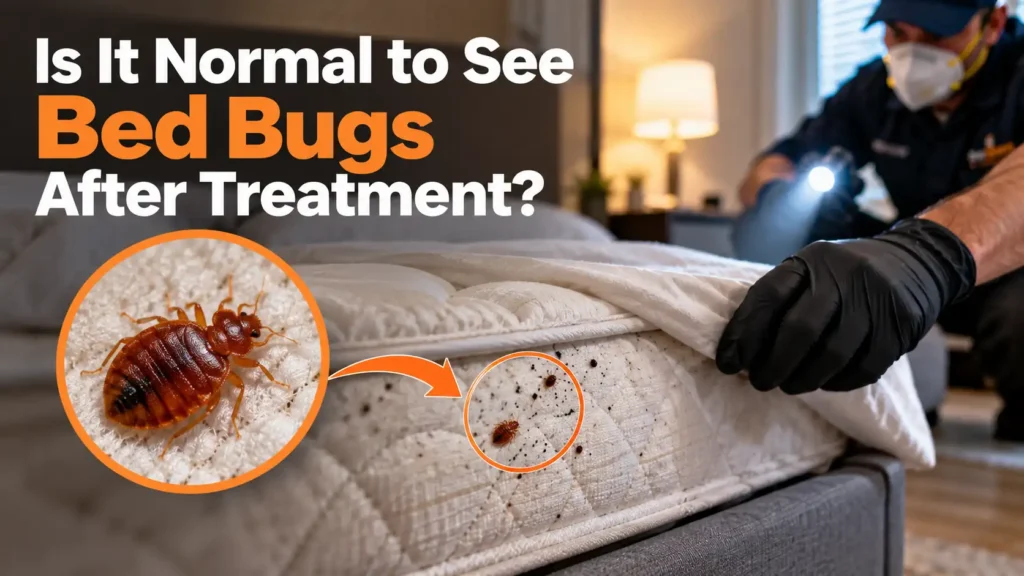
Homeowners often ask is it normal to see bed bugs after treatment when they discover a live insect several days after extermination.
Some sightings can occur after chemical treatment because certain products take time to affect exposed insects. Bed bugs hidden during the application may later move across treated surfaces. In other cases, the insects may have survived because their hiding places were not reached.
The meaning of a sighting also depends on the treatment method. Continued live activity after a properly completed heat treatment may require prompt evaluation, while a multi-visit chemical program may include monitoring between scheduled applications.
Pay attention to whether sightings are becoming less frequent or whether activity appears to be increasing. Finding several live insects repeatedly, particularly in previously unaffected rooms, deserves professional attention.
Do not apply additional household insecticides without consulting your exterminator. Unplanned spraying may create unnecessary exposure risks or interfere with the original control strategy.
How Long Do Bed Bugs Live After Treatment?
Understanding how long do bed bugs live after treatment requires knowing how the treatment affects different life stages.
Bed bugs exposed to adequate professional heat can die during the treatment. In contrast, certain insecticides act gradually, and insects may survive until they contact the treated surface or receive a sufficient dose.
Bed bugs hidden inside untreated cracks, furniture joints, or other protected spaces can survive longer. Some populations have also developed resistance to particular pesticide ingredients, which can reduce the effectiveness of certain chemical products.
The absence of visible insects immediately after extermination is encouraging, but it does not guarantee that every bed bug has been eliminated.
Your exterminator may recommend further monitoring or another visit to verify that remaining activity has stopped.
How to Clean Your House After Bed Bug Treatment
Learning how to clean your house after bed bug treatment is essential because cleaning the wrong surfaces too early can reduce the effectiveness of certain control methods.
Different treatments require different cleaning procedures. The most important rule is to follow your technician’s instructions instead of using a general cleaning schedule.
Cleaning After Chemical Treatment
When residual pesticides are applied to baseboards, cracks, furniture joints, or other permitted areas, those surfaces may need to remain undisturbed for a specified period.
Avoid scrubbing, washing, or applying household cleaners to treated locations until your exterminator confirms that cleaning is permitted. Removing the product prematurely may reduce the continued control of insects emerging from hiding places.
You may be able to clean untreated areas sooner. However, it is important to know which surfaces received pesticide applications.
Cleaning After Heat Treatment
After professional heat treatment, normal household cleaning may resume once the property has cooled and the technician approves access.
If the heat treatment was combined with chemical applications, follow the pesticide-related cleaning restrictions as well.
Some belongings may have been excluded from the heated area because they were sensitive to temperature. These items should be inspected or handled according to the pest control provider’s instructions before being returned.
Cleaning Bedding and Clothing
Suitable sheets, pillowcases, clothing, and other washable fabrics can often be treated in a clothes dryer on high heat for approximately 30 minutes, provided their care labels allow it.
The U.S. Environmental Protection Agency advises that washing alone may not eliminate all bed bugs and eggs.
Keep cleaned belongings separate from potentially infested items until the treatment process is complete.
When Can You Vacuum After Bed Bug Treatment?
Knowing when can you vacuum after bed bug treatment is important because vacuuming can sometimes remove residual pesticides from areas where they are intended to remain active.
After certain chemical treatments, the technician may recommend avoiding vacuuming along treated baseboards, carpet edges, furniture joints, or other specific surfaces for a period of time.
Other parts of the home may be safe to clean sooner. The timing depends on the pesticide product, application location, and treatment plan.
Once vacuuming is permitted, carefully clean the recommended areas using appropriate attachments. Dispose of vacuum contents promptly in a sealed bag placed in an outdoor trash container.
Vacuuming can help remove accessible insects, shed skins, and debris, but it does not reliably eliminate every hidden bed bug or egg. It should be viewed as a supporting measure rather than a replacement for professional treatment.
Bed Bug Bites After Treatment: Should You Be Worried?
Noticing bed bug bites after treatment can be concerning, especially when you expect the infestation to have been eliminated.
However, new or continuing skin irritation does not always prove that bed bugs remain active. Some people experience delayed reactions, while others continue itching as earlier bites heal.
Mosquitoes, fleas, and certain skin conditions can also produce marks that resemble bed bug bites. This makes physical evidence more reliable than skin symptoms alone.
If you notice suspicious marks, inspect your mattress seams, bed frame, and nearby furniture for live insects, eggs, shed skins, or fresh dark spots.
For more information about identifying possible bite reactions, read What Do Bed Bug Bites Look Like?
Seek medical advice if your symptoms are severe, persist unexpectedly, or show signs of infection.
How to Tell if Bed Bug Treatment Worked
Homeowners researching how to tell if bed bug treatment worked should focus on the absence of new infestation evidence over time rather than expecting an immediate guarantee.
Successful treatment should generally produce a sustained reduction in live insects and new signs of activity.
Inspect mattresses, headboards, box springs, and surrounding furniture for bed bugs, eggs, and dark fecal marks. Previously existing stains may remain after extermination, so pay particular attention to new markings.
If you notice unfamiliar dark spots, the guide What Does Bed Bug Poop Look Like? explains what bed bug droppings typically look like and where they are found.
Correct insect identification is also important. Other small insects can resemble bed bugs, making unnecessary treatment possible when identification is incorrect. Our related article How to Identify Bed Bugs in Your Illinois Home can help with the initial comparison.
Monitoring devices, including bed leg interceptors, can provide additional evidence. Although no single empty trap proves complete elimination, repeated inspections without new findings are reassuring.
Bed Bug Eggs Hatching After Treatment
Bed bug eggs hatching after treatment can explain why some homeowners notice small insects after the initial extermination.
Bed bug eggs are tiny and often concealed in narrow spaces near mattresses, furniture joints, headboards, and cracks. Some insecticides do not reliably kill eggs, particularly when the product cannot reach them.
If surviving eggs hatch, young bed bugs may emerge and begin searching for blood meals. Depending on the treatment program, they may encounter residual insecticides or require additional control measures.
Professional heat treatment can kill bed bug eggs when all affected areas reach the necessary temperature and remain at that level for sufficient time.
This is one reason post-treatment inspections are valuable. Technicians can assess whether continued activity results from surviving insects, newly hatched nymphs, or another introduction.
How Long to Monitor for Bed Bugs After Treatment
Understanding how long to monitor for bed bugs after treatment helps homeowners avoid overlooking a continuing infestation.
Monitoring should follow the schedule established by the exterminator. The first several weeks after treatment are particularly important, but more extensive infestations or multifamily properties may require longer observation.
Examine previously affected sleeping areas and check monitoring devices regularly. Keep a record of any live insects, new fecal spots, eggs, or other physical evidence.
If you are unsure what warning signs to look for, review Signs of Bed Bugs in Illinois for a broader explanation of early infestation indicators.
Repeated checks provide a more dependable picture than a single inspection. If fresh evidence continues appearing, contact the treatment provider rather than assuming it will resolve on its own.
How to Prevent Bed Bugs From Returning After Treatment
Once your exterminator approves normal household activities, practical prevention habits can reduce the chance of bringing bed bugs back into your Illinois property.
- Inspect luggage after traveling. Examine suitcase seams, pockets, handles, and zippers before placing bags near beds or upholstered furniture.
- Check used furniture carefully. Inspect secondhand mattresses, couches, headboards, and chairs before bringing them indoors.
- Use mattress encasements. Properly fitted protective covers can reduce hiding spaces and make future inspections easier.
- Keep bedrooms organized. Reducing clutter can improve visibility and make it easier to identify suspicious activity.
- Avoid transferring potentially infested belongings. Keep suspected items contained until they can be properly inspected or treated.
- Monitor beds and nearby furniture. Regular inspections can help identify activity before an infestation becomes widespread.
- Communicate with property management. Residents in apartment buildings should report suspected activity promptly because bed bugs may spread between connected units.
Prevention is important because even a successful treatment cannot permanently protect a property from new introductions.
Homeowners who want to understand common introduction routes can read What Causes Bed Bugs in Illinois Homes for additional information.
Why Bed Bug Follow-Up Treatment May Be Necessary
A bed bug follow-up treatment may be necessary when hidden insects survive the original service, eggs hatch after chemical applications, or additional infestation areas are discovered.
Some professional treatment plans are designed to include more than one visit. Multiple appointments do not automatically mean that the original work was ineffective. Instead, follow-up can be part of a planned approach to controlling bed bugs at different life stages.
During a reinspection, a technician may examine mattresses, furniture joints, baseboards, and other previously affected areas. Monitoring devices may also be checked for evidence of continuing activity.
This approach is especially useful in Illinois apartment buildings, where neighboring units or connected structural openings may complicate control.
A coordinated treatment and monitoring strategy can help determine whether additional work is necessary.
When to Call an Exterminator After Bed Bug Treatment
Knowing when to call an exterminator after bed bug treatment can help you avoid delays when the original infestation has not been fully controlled.
Contact your pest control provider if you repeatedly find live bed bugs, discover fresh eggs or fecal marks, or notice activity spreading into additional rooms.
A professional assessment is also appropriate when the recommended follow-up period has passed but clear evidence of bed bugs remains.
Before scheduling additional work, ask whether the original treatment plan includes another inspection, repeat application, or other follow-up provisions. It is important to understand the treatment scope before paying for another service.
Treatment costs may vary depending on property size, infestation severity, number of affected rooms, and control method. Illinois homeowners can review Bed Bug Extermination Cost in Chicago to understand common pricing factors.
For more information about whether an infestation can return after extermination, see Can Bed Bugs Come Back After Treatment.
Professional Bed Bug Control Services in Illinois
When bed bugs continue appearing after treatment, a professional inspection can help identify surviving insects, untreated hiding places, or the possibility of a new introduction.
Perfect Pest Control LLC provides bed bug inspection and treatment services for residential and commercial properties in the Chicagoland area, including Hanover Park, Chicago, Naperville, Aurora, and surrounding Illinois communities.
The company’s Bed Bug Control Services in Illinois include inspection, targeted treatment, prevention guidance, and follow-up monitoring. Homeowners and businesses dealing with other pest problems can also explore Pest Control Illinois services.
Still Seeing Bed Bugs After Treatment? Contact Perfect Pest Control LLC
If you are finding live bed bugs, fresh stains, or other evidence after extermination, do not ignore the warning signs. A professional inspection can help determine whether additional treatment or monitoring is necessary.
Call Perfect Pest Control LLC at (630) 447-9777 to discuss the activity you are noticing and ask about inspection and treatment options for your Illinois home or business.
Frequently Asked Questions About Bed Bug Treatment Aftercare
1. What to Expect After Bed Bug Treatment During the First Week?
During the first week, homeowners should follow re-entry and cleaning instructions while watching for live insects or new signs of activity. The results depend on whether heat, pesticides, or a combination of methods was used.
2. Can Bed Bugs Come Back After Treatment?
Yes. Bed bugs may return if hidden insects or eggs survive, affected areas remain untreated, or new insects enter through belongings. Continued monitoring and appropriate follow-up help identify these problems.
3. Should You Stay in the Same Bedroom After Extermination?
Often, yes, once your technician confirms the room is safe to occupy. Unnecessarily moving to another bedroom can spread bed bugs through belongings or encourage insects to move toward another sleeping area.
4. Can You Wash Your Sheets Immediately After Bed Bug Treatment?
Follow your exterminator’s instructions. Suitable bedding can often be laundered or heat-treated, but you should not disturb pesticide-treated items or surfaces before the required restrictions have ended.
5. Does One Live Bed Bug Mean the Treatment Failed?
Not necessarily. A single insect may have survived temporarily or emerged after treatment. However, the sighting should be documented and reported, especially if live activity continues.
6. Do Bed Bugs Disappear Immediately After Professional Treatment?
Not always. Properly applied heat can kill insects during the treatment, while some chemical applications act over time. A follow-up inspection may be needed to confirm that the infestation is controlled.
7. Should You Throw Away Your Mattress After Bed Bug Extermination?
Not automatically. Some mattresses can be treated and protected with specialized encasements. Discarding furniture without proper precautions can spread insects to other areas.
Final Thoughts
Understanding what to expect after bed bug treatment can help Illinois homeowners protect their properties and make informed decisions during the recovery process.
The most important steps include following your exterminator’s instructions, waiting until re-entry is permitted, cleaning treated areas at the appropriate time, and monitoring for new signs of infestation.
Although professional treatment can successfully control bed bugs, continued activity may require further inspection. Early identification and appropriate follow-up can help prevent a remaining infestation from becoming more difficult to manage.
If your Illinois home or business is still showing signs of bed bugs after extermination, contact Perfect Pest Control LLC at (630) 447-9777 to discuss professional inspection and treatment recommendations.