Bed bugs can enter even the cleanest homes in Illinois. These tiny, blood-feeding insects usually arrive by hitching a ride on luggage, clothing, secondhand furniture, or other personal belongings. In apartment buildings, they may also move between neighboring units through small openings and shared spaces.
If you’re wondering what causes bed bugs in Illinois homes, the main cause is the accidental introduction of bed bugs from an already infested location. Once inside, they can hide near sleeping areas, feed on people, and reproduce without being noticed.
Illinois homeowners, renters, and property managers can face bed bug problems in any season. Understanding how these pests enter, what helps them survive, and how to recognize an infestation early can help you protect your property and avoid a larger problem.
Where Do Bed Bugs Come From?
Many homeowners ask, where do bed bugs come from, especially when they have never experienced an infestation before.
Bed bugs do not develop spontaneously inside mattresses or appear because a home is poorly maintained. They come from existing infestations and move into new locations through human activity or, sometimes, by crawling from nearby infested areas. Professional Pest Control Illinois services can help address these infestations.
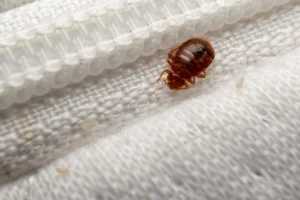
The common bed bug (Cimex lectularius) is a small, flat, reddish-brown insect that feeds primarily on blood. Unlike ants or cockroaches, bed bugs are not attracted to leftover food, garbage, or kitchen crumbs.
They usually stay near places where people sleep or rest, including bedrooms, living rooms, hotel rooms, and apartment units.
Because bed bugs are small and excellent at hiding, an infestation may begin with only a few insects and remain unnoticed until their population increases.
How Do Bed Bugs Get Into Your House?
If you’re asking how do bed bugs get into your house, the answer usually involves something that has recently moved between locations.
Bed bugs cannot fly or jump. Instead, they crawl into belongings and travel with them.
1. Luggage and Travel Bags
Travel is one of the most common ways bed bugs reach a new property.
Hotels, vacation rentals, and other temporary accommodations can contain bed bugs, even when rooms appear clean.
Can you bring bed bugs home from a hotel? Yes. Bed bugs may hide in suitcase seams, backpacks, folded clothing, or other personal items. Once the luggage reaches your bedroom, the insects may crawl out and find a nearby hiding place.
After traveling, inspect your bags carefully and keep them away from beds until you have checked them.
2. Secondhand Furniture
Buying used furniture can be affordable, but it also creates an opportunity for unwanted pests to enter your home.
Can bed bugs come from used furniture? Absolutely. Used mattresses, bed frames, upholstered chairs, couches, and headboards may contain live insects or eggs.
Bed bugs can hide in:
- Upholstery seams and fabric folds
- Wooden joints and screw holes
- Mattress piping and labels
- Cracks beneath furniture
- The underside of couches and chairs
Even furniture that looks spotless can contain bed bugs.
Inspect secondhand items before bringing them indoors, and avoid collecting discarded mattresses or furniture from sidewalks.
3. Clothing, Backpacks, and Personal Belongings
Can bed bugs travel on clothes? Yes, although they are more likely to hide in clothing that has been placed near an infested bed or furniture than to remain on clothing someone is actively wearing.
They may also travel inside purses, backpacks, gym bags, and other belongings.
For example, a backpack placed beside an infested couch may pick up a bed bug. When the bag is carried home and left near a bed, the insect has an opportunity to establish itself in a new location.
4. Visitors and Overnight Guests
Bed bugs can occasionally enter a property through items brought by visitors.
An overnight guest may unknowingly carry insects in luggage or personal belongings, particularly if those items were recently exposed to an infestation.
This does not mean visitors should be treated as a problem. It simply explains why bed bugs can appear even when residents have not traveled or purchased furniture.
5. Moving Between Homes
Moving into a new house or apartment can also introduce bed bugs.
Infested furniture, moving boxes, and personal belongings can transport insects from one property to another.
In some cases, a rental unit may already contain hidden bed bugs from a previous infestation.
Inspecting bedrooms and furniture before moving in can help identify potential problems.
What Attracts Bed Bugs to Your Home?
Understanding what attracts bed bugs to your home helps explain why they gather near beds and sleeping areas.
Bed bugs are primarily attracted to:
Carbon Dioxide
When people breathe, they release carbon dioxide. Bed bugs can detect this gas and use it to help locate a potential host.
Body Heat
Human body warmth helps bed bugs identify places where they can feed.
This is one reason they frequently hide close to beds, couches, and other resting areas.
Human Presence
Bed bugs need blood meals to develop and reproduce. A home where people regularly sleep provides access to that food source.
Convenient Hiding Places
Cracks, mattress seams, bed frames, and furniture joints provide protected spaces where bed bugs can remain hidden between meals.
Importantly, bed bugs are not attracted to dirt, food waste, or poor housekeeping. A clean bedroom can offer the same access to a sleeping person as a cluttered one.
Common Causes of Bed Bug Infestation in Illinois
The common causes of bed bug infestation are best understood as a combination of accidental introduction, suitable hiding places, and delayed detection.
| Contributing factor | How it affects your home |
| Frequent travel | Creates opportunities for insects to arrive in luggage |
| Secondhand furniture | May introduce hidden adults, young bed bugs, or eggs |
| Shared apartment buildings | Allows movement from nearby infested units |
| Cluttered bedrooms | Provides additional hiding places and makes inspections harder |
| Delayed identification | Gives an existing population more time to reproduce |
| Incomplete treatment | May leave surviving insects or eggs behind |
Not every exposure leads to an infestation. However, if bed bugs enter a property and remain undetected, their numbers can increase over time.
The most useful approach is to identify how they may have arrived, inspect the likely hiding areas, and address the problem before it spreads.
How Do Bed Bugs Spread From House to House?
People often wonder how do bed bugs spread from house to house when neighboring properties are separated by yards, streets, or driveways.
In detached homes, bed bugs generally spread through the movement of infested belongings rather than traveling long outdoor distances.
Examples include moving furniture between houses, carrying infested luggage after a trip, or transferring belongings from one residence to another.
In connected buildings, however, bed bugs may also crawl through structural openings.
Can Bed Bugs Spread Between Apartments?
Yes. Can bed bugs spread between apartments is an especially important question for people living in Illinois multifamily housing.
Bed bugs may move through wall openings, gaps around pipes, baseboards, and other connected spaces. They can also spread when residents move infested furniture or belongings through shared areas.
This makes early reporting and coordinated inspections important.
If one apartment has confirmed bed bugs, nearby units may need evaluation even when residents have not noticed bites.
Property managers should work with qualified pest control professionals to determine the extent of the problem and develop an appropriate treatment plan.
Do Bed Bugs Come From Dirty Homes?
No. The answer to do bed bugs come from dirty homes is that cleanliness does not cause bed bugs.
Bed bugs can infest clean houses, luxury apartments, hotels, offices, and other buildings.
Their primary requirement is access to a blood meal, not food scraps or household dirt.
However, clutter can make an infestation harder to detect and manage. Piles of clothing, boxes, and unused belongings create more protected spaces where insects can hide.
Regular cleaning can support prevention and inspection, but cleaning alone cannot guarantee that a home will remain free of bed bugs.
If you discover an infestation, focus on proper identification and treatment rather than assuming the problem resulted from poor housekeeping.
Can Bed Bugs Survive Illinois Winters?
Yes. Can bed bugs survive Illinois winters is a common concern because the state experiences freezing temperatures.
Although extreme cold can kill bed bugs under controlled conditions, outdoor winter weather does not reliably eliminate an indoor infestation.
Most Illinois homes and apartment buildings are heated throughout winter. Bed bugs hiding in mattresses, furniture, and wall spaces remain protected from freezing outdoor temperatures.
Even in unheated locations, insects hidden deep inside belongings may not experience temperatures cold enough for long enough to kill them.
Why Winter Doesn’t Automatically Solve an Infestation
Bed bugs can remain hidden for extended periods without feeding. They also survive in sheltered indoor environments where temperatures are more stable.
Placing a mattress outdoors for a cold night is not a dependable treatment method.
Effective freezing requires specific temperatures and sufficient exposure time throughout the infested item.
For most households, professional assessment and properly controlled treatment methods are more dependable than relying on Illinois weather.
Early Signs of Bed Bugs in Your Home
Recognizing the early signs of bed bugs in your home can help prevent a small problem from becoming more difficult to manage.
Bed bugs are secretive insects, and people may not notice them immediately.
1. Small Dark Spots on Bedding
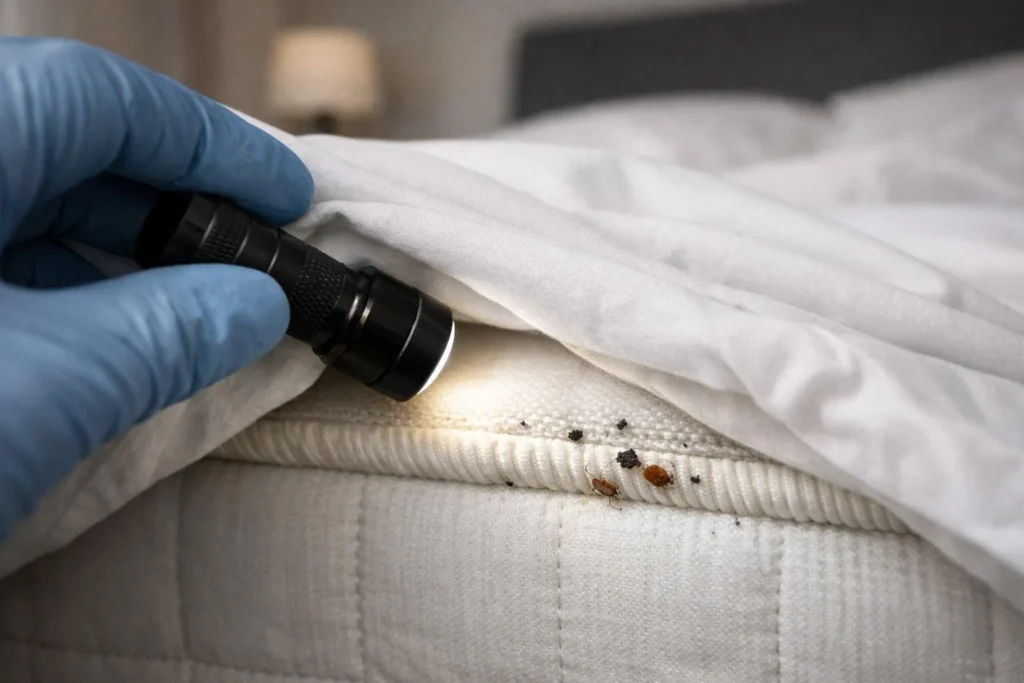
Tiny black or dark brown spots on mattress seams, sheets, or bed frames may be bed bug droppings.
These marks can resemble small ink stains.
For additional identification guidance, see our related article: What Does Bed Bug Poop Look Like?
2. Reddish or Rust-Colored Stains
Small reddish stains on bedding may occur when a recently fed bed bug is crushed.
These marks are possible warning signs, but they do not confirm an infestation on their own.
3. Shed Skins and Eggs
As bed bugs grow, they shed their outer coverings.
You may find pale, empty skins near mattress seams, headboards, or furniture joints.
Their eggs are tiny, whitish, and often attached to protected surfaces.
4. Live Bed Bugs
Adult bed bugs are generally reddish-brown, flat, oval-shaped, and approximately the size of an apple seed.
Young bed bugs are smaller and can be harder to see.
If you’re unsure what you’re looking at, our guide How to Identify Bed Bugs in Your Illinois Home can help you compare common identifying features.
5. Unexplained Skin Reactions
Some people develop itchy red bumps after bed bug bites, while others experience little or no visible reaction.
Bite marks alone cannot reliably identify bed bugs because other insects and skin conditions may cause similar symptoms.
Learn more in What Do Bed Bug Bites Look Like? Signs and Symptoms in Illinois.
6. An Unusual Musty Odor
A noticeable sweet or musty odor may occur in heavier infestations.
However, odor is not a reliable early detection method and should not replace a physical inspection.
For a broader checklist, read Signs of Bed Bugs in Illinois.
Where Do Bed Bugs Usually Hide Inside Illinois Homes?
Bed bugs prefer narrow, protected spaces close to people who sleep or rest.
Common hiding locations include mattress seams, box springs, bed frames, headboards, upholstered furniture, and nearby baseboards.
They may also hide behind picture frames, beneath loose wallpaper, inside furniture joints, or around wall openings.
How to Inspect Your Bedroom
Start by checking the bed and nearby furniture.
Use a flashlight to examine mattress seams, the underside of the box spring, bed frame joints, and the back of the headboard.
Next, inspect nearby nightstands, chairs, and couches.
Look for live insects, dark fecal marks, shed skins, or eggs.
Avoid moving potentially infested items into other rooms, as this may spread the insects.
For a more detailed room-by-room inspection guide, see Where Do Bed Bugs Hide in Illinois Homes?
How to Prevent Bed Bugs in Your Home
Learning how to prevent bed bugs in your home is especially valuable for Illinois residents who travel frequently, live in apartments, or purchase secondhand furniture.
Although no prevention strategy can eliminate every risk, several practical steps can reduce the likelihood of introducing or spreading bed bugs.
Inspect Hotel Rooms Before Unpacking
Before placing luggage on a hotel bed, examine mattress seams, the headboard, and nearby furniture for signs of bed bugs.
Keep suitcases on an inspected luggage rack and away from upholstered furniture.
Check Luggage After Traveling
Inspect suitcase seams, pockets, handles, and zippers after returning home.
If exposure is suspected, keep potentially infested items contained until they can be inspected or treated.
Inspect Used Furniture
Carefully examine secondhand beds, couches, chairs, and other upholstered items before bringing them indoors.
Avoid taking discarded mattresses or furniture from curbs.
Use Bed Bug Mattress Encasements
High-quality, bed-bug-resistant mattress and box spring encasements can reduce hiding places and make inspections easier.
Encasements should remain properly sealed and be checked for tears.
Reduce Bedroom Clutter
Keep belongings organized and avoid storing unnecessary items around beds.
This makes it easier to inspect common hiding places and carry out treatment if needed.
Use Heat for Suitable Fabrics
A clothes dryer on high heat for approximately 30 minutes can kill bed bugs and their eggs in suitable items.
Follow fabric care instructions, and do not assume washing alone will eliminate an infestation.
Inspect Regularly
Periodically check mattresses, bed frames, and furniture for warning signs, particularly after travel or possible exposure.
Communicate With Property Management
If you live in an apartment building, report suspected bed bugs promptly.
Early communication can help prevent infestations from spreading to other units.
What Should You Do If You Find Bed Bugs?
Finding a suspected bed bug can be stressful, but acting carefully is important.
First, try to capture the insect in a sealed container or take a clear photograph for identification.
Next, inspect nearby sleeping areas without moving furniture or belongings throughout the property.
Avoid throwing away mattresses immediately. Discarding furniture without proper precautions may spread insects and does not necessarily eliminate the infestation.
You should also avoid using outdoor pesticides indoors, applying chemicals contrary to label directions, or relying on total-release foggers as your primary treatment method.
If bed bugs are confirmed, consider professional inspection and an integrated pest management plan.
When to Call Pest Control for Bed Bugs
Understanding when to call pest control for bed bugs can help you avoid delays that allow an infestation to spread.
Professional assistance is especially worth considering when:
- You have found live bed bugs or confirmed eggs.
- Bed bugs appear in more than one room.
- The infestation involves an apartment or multifamily building.
- Previous DIY efforts have not resolved the problem.
- You cannot locate the insects’ hiding places.
- New evidence continues to appear after cleaning or treatment.
A qualified pest control professional can inspect affected areas, assess the infestation, and recommend an appropriate treatment strategy.
Depending on the circumstances, treatment may involve controlled heat, targeted insecticide applications, steam, monitoring, and follow-up inspections.
Homeowners comparing treatment approaches can review Bed Bug Heat Treatment vs. Chemical Treatment in Illinois.
Treatment costs vary according to infestation severity, property size, treatment method, and follow-up requirements. For a related pricing guide, see Bed Bug Extermination Cost in Chicago.
Professional Bed Bug Control in Illinois
If you suspect an infestation, proper identification is the first step toward choosing an effective solution.
Best@Pest Exterminating provides pest control information and services. If your property is in Illinois, confirm the company’s service coverage before requesting assistance.
For more information about available treatment options, visit Bed Bug Control Services in Illinois once the appropriate local service page has been confirmed.
Frequently Asked Questions About Bed Bugs in Illinois
1. Can bed bugs appear in a house without anyone traveling?
Yes. Bed bugs can enter through secondhand furniture, visitors’ belongings, moving boxes, or neighboring units in connected buildings. Travel is only one possible introduction route.
2. How quickly can a bed bug infestation develop?
An infestation may take weeks or months to become noticeable, depending on the number of insects introduced, environmental conditions, and how often they feed. Early detection can limit the opportunity for population growth.
3. Can bed bugs live in couches instead of beds?
Yes. Bed bugs can hide in couches, recliners, upholstered chairs, and other furniture where people regularly rest. They are not limited to mattresses or bedrooms.
4. Will leaving the heat off during winter kill bed bugs?
Not reliably. Bed bugs may survive in protected areas, and the cold may not penetrate furniture or wall spaces sufficiently. Turning off home heating is not a recommended treatment strategy.
5. Can bed bugs disappear on their own?
An established infestation is unlikely to disappear simply because you clean or stop using a room. Bed bugs can survive for extended periods without feeding, so proper inspection and treatment are important.
6. Do bed bugs carry diseases?
Bed bugs are not known to transmit diseases to people. However, their bites can cause itching, allergic reactions, sleep disruption, and secondary skin infections from scratching.
7. Should I replace my mattress if I find bed bugs?
Not necessarily. A suitable mattress encasement and a comprehensive treatment plan may allow you to keep it. Replacing a mattress without addressing other hiding places can result in the new mattress becoming infested.
Final Thoughts: Protecting Your Illinois Home From Bed Bugs
Bed bugs usually enter Illinois homes through infested luggage, furniture, clothing, or other belongings. In apartment buildings, they can also spread between connected units.
These pests are not a sign of poor housekeeping, and freezing outdoor temperatures do not guarantee their elimination.
The most effective approach is to understand the likely source, recognize warning signs early, inspect carefully, and take appropriate steps to prevent further spread.
If you discover live bed bugs or continue seeing evidence of an infestation, contact a qualified pest control provider for an inspection and treatment recommendations. For Illinois properties, verify that your chosen provider serves your location before scheduling service.