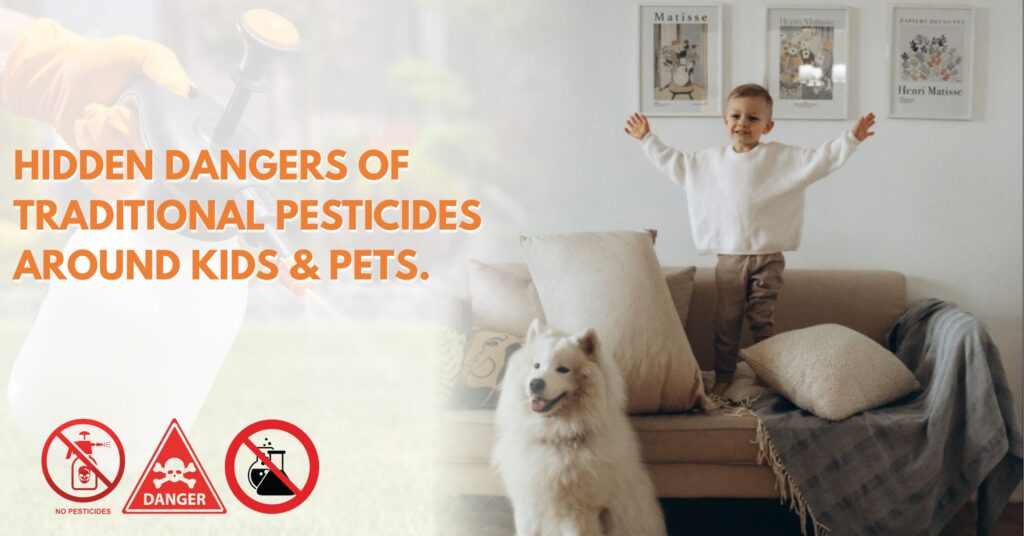
Many Illinois parents ask the same question: “Is pest control really safe for my kids and pets?” The short answer is: it can be when the right products and methods are used. The real danger comes from heavy, traditional DIY pesticides used in the wrong places or at the wrong doses.
Is Pest Control Safe for Kids and Pets?
Pest control itself isn’t automatically unsafe. What matters is what is used, where it’s used, and who is applying it. Traditional DIY sprays and foggers often leave residue on floors, toys, lawns, and pet fur and that’s where most of the risk comes from.
Modern, professional pest control that focuses on integrated pest management (IPM), targeted applications, and low-toxicity products can keep your home pest-free while dramatically reducing exposure for children and animals. The rest of this guide explains where the danger really comes from and how to choose safer options for your family.
Why Traditional Pesticides Are Dangerous for Children
Children are especially vulnerable to chemical pesticides. Their immune and neurological systems are still developing, and their behavior, like playing on the floor or putting hands in their mouths, increases their exposure to toxic substances.
Here’s a breakdown of the most serious risks and practical ways to reduce them.
Increased Sensitivity to Chemicals
Why It’s a Danger:
Young children are not just “small adults” ; their bodies absorb toxins faster, and their organs are less able to detoxify them. Even small doses of pesticides can disrupt normal growth and immune development.
Real Risk:
Exposure may cause headaches, fatigue, skin rashes, or long-term developmental problems, especially in infants and toddlers.
Safer Solution:
Use non-toxic pest control methods, such as food-grade diatomaceous earth or DIY sprays made with vinegar and essential oils. Store any chemical products out of reach, and never spray pesticides where kids eat, sleep, or play.
Developmental & Neurological Risks
Why It’s a Danger:
Pesticides don’t just target bugs, they disrupt nervous systems. Unfortunately, children’s brains are especially sensitive to these chemicals during early development.
Real Risk:
Certain pesticides, especially organophosphates, are linked to behavioral disorders, learning disabilities, and ADHD.
According to a study published in Pediatrics, children with higher levels of organophosphate pesticide metabolites in their urine were nearly twice as likely to be diagnosed with ADHD compared to those with lower or undetectable levels.
Safer Solution:
Avoid pest control products that list organophosphates like chlorpyrifos or malathion. Instead, look for EPA Safer Choice–certified products and choose pest control services that follow integrated pest management (IPM) a strategy that reduces chemical use and emphasizes prevention.
Accidental Ingestion or Skin Absorption
Why It’s a Danger:
Kids are always exploring crawling, touching, licking. If pesticides are used on floors, carpets, or toys, children can ingest them unknowingly.
Real Risk:
Even residue can be absorbed through the skin or swallowed, causing vomiting, diarrhea, or worse.
Safer Solution:
Choose pest control methods that leave no residue, such as sticky traps or sealed bait stations kept out of reach. If you’ve recently sprayed, deep-clean surfaces before allowing kids to return to the area.
Respiratory Issues from Vapors
Why It’s a Danger:
Children’s lungs are smaller and more sensitive than adults’. Inhaling pesticide fumes even after the spray has “settled” can trigger asthma or bronchial irritation.
Real Risk:
Chronic exposure can increase risk of respiratory illnesses and allergies.
Safer Solution:
Skip the sprays entirely. Use gel-based insect traps, ultrasonic repellents, or natural deterrents like citrus peels and cloves for indoor pests. Always ventilate treated areas for several hours, and use air purifiers to reduce lingering toxins.
Pro Tip: Always read the label. Look for warning words like “Danger,” “Warning,” or “Caution.” These indicate how toxic the product is and “Danger” is the most hazardous.
Pesticide Risks to Kids & Pets
| Danger | Real Risk/Stat | Safer Alternative |
| Ingestion & contact | Over 5,000 pet pesticide cases in 2022 (ASPCA) | Pet-safe natural treatments, avoid treated lawns |
| Acute poisoning | Vomiting, seizures, death (Pet Poison Helpline) | Avoid pyrethroids and organophosphates |
| Long-term exposure | Cancer, liver damage (Environmental Research) | Use low-toxicity or IPM pest control services |
| Residue transfer | Days-long fur contamination (ScienceDirect) | Wipe paws after walks, restrict access post-treatment |
When to Call a Professional for Safe Pest Control: Perfect Pest
DIY pest control can only go so far, and sometimes the safest solution for Illinois homes is to call in trained professionals. But “professional” doesn’t have to mean harsh chemicals or putting your kids and pets at risk.
At Perfect Pest, we specialize in family-safe, eco-conscious pest control that’s just as effective as traditional methods without the toxic exposure.
Here’s when it’s time to call a pro, and how to make sure your pest control plan protects the people (and pets) you love most.
1. Persistent or Widespread Infestations
Why It Matters:
If you’re constantly dealing with ants, roaches, mice, or termites despite home treatments, the infestation may be deeper or more widespread than it looks.
Perfect Pest’s Approach:
Our team uses Integrated Pest Management (IPM) to identify the source of the infestation and treat it using low-toxicity methods, physical barriers, and targeted eco-safe treatments without unnecessary spraying.
2. Structural or Health Risks
Why It Matters:
Pests like rodents and termites don’t just annoy they cause property damage and can carry bacteria or allergens that affect indoor air quality.
Perfect Pest’s Approach:
We offer non-invasive inspections and use products that are EPA-registered and safe for children and pets. No guesswork, no risk, just a clear plan with transparent product info and safety guidance.
3. Unknown or Dangerous Pests
Why It Matters:
Bees, wasps, spiders, and wildlife can be dangerous to remove without professional tools or knowledge and improper treatment may make it worse.
Perfect Pest’s Approach:
We’re trained in safe and humane pest removal, with a focus on minimizing disruption and avoiding chemical overuse. You’ll know exactly what’s being used and why before we begin.
4. Post-Treatment Safety Concerns
Why It Matters:
Even low-toxicity treatments can be risky if used improperly especially around young children, babies, dogs, and cats.
Perfect Pest’s Approach:
After treatment, we provide easy-to-follow aftercare instructions including how long to wait before reentry, how to clean treated surfaces, and how to protect toys, bedding, and food areas.
Why Families Choose Perfect Pest for Safe, Professional Help
| What We Offer | Why It Matters |
| IPM-certified technicians | Reduces chemical use and long-term pest risks |
| Family- and pet-safe treatments | Safer for crawling babies, curious pets, and kids |
| Transparent product info | You’ll know exactly what’s being used — and why |
| Aftercare guidance | We help you protect your family even after we leave |
| Satisfaction guarantee | We stand behind our work — and your safety |
Book a free, no-pressure consultation with a Perfect Pest professional today.
If pests are becoming a problem but you’re not willing to put your family or pets at risk, we’re here to help.
👉Book a free, no-pressure consultation with a Perfect Pest professional today.
Conclusion
Traditional pesticides may seem effective, but they often come with hidden dangers — especially for families with young children and pets. From respiratory issues and accidental ingestion to long-term health risks, the dangers of traditional pesticides are too serious to ignore. Thankfully, safer alternatives exist. Choosing eco-friendly pest solutions or working with a child- and pet-friendly pest control provider like Perfect Pest ensures your home stays protected without compromising your family’s well-being. Make the smart switch to safe pest control alternatives and protect what matters most — safely and responsibly.
Be proactive. Read labels. Ask questions. And when in doubt, choose a pest control partner who puts safety first like Perfect Pest.