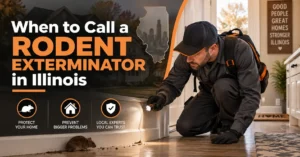

A scratching sound inside a wall may seem harmless at first. A few small droppings in the kitchen may also look like a minor problem. However, rats and mice can remain hidden for long periods while nesting, searching for food, and moving through walls, attics, basements, and other quiet spaces.
Knowing When to Call a Rodent Exterminator in Illinois can help you deal with the problem before rodents spread through more areas of your property. Early action is especially important when you find fresh droppings, repeated gnaw marks, damaged food packages, nesting material, unusual odors, or rodents appearing in living or working areas.
Illinois homeowners also need to think about seasonal activity. During colder weather, mice may use buildings as shelter. The University of Illinois Extension notes that mice can move into buildings during cold Illinois winters and may make their presence known through scratching, droppings, urine odors, gnawing, and nesting material.
This guide explains when a rodent problem may require professional attention, how to identify early warning signs, when DIY traps may no longer be enough, and what homeowners and businesses can do before an exterminator arrives.
Should You Call an Exterminator After Seeing One Mouse or Rat?
Seeing one rodent does not tell you exactly how many are inside the building. However, an indoor sighting should not be ignored.
Rats and mice usually seek areas where they can find shelter, food, and water without much human activity. That means there may be activity behind cabinets, appliances, walls, storage areas, basements, ceilings, or other concealed spaces.
If you see one mouse, begin checking the property for other signs of rodent infestation. Look for droppings, chewed packaging, nesting material, small entry holes, urine odors, scratching noises, or fresh gnaw marks.
A single sighting combined with several other signs is a much stronger reason to arrange an inspection.
Property owners who are unsure about the species involved can also read Common Types of Rodents Invading Homes and Businesses in Illinois to better understand what may be entering the building.
When to Call a Rodent Exterminator in Illinois Instead of Using DIY Traps
DIY trapping can sometimes help when activity is very limited and you know where the rodent is traveling. However, traps alone do not solve every infestation.
The CDC recommends inspecting both the inside and outside of a property when rodent evidence is found. Entry points also need attention so additional mice or rats cannot continue entering the structure.
You should consider professional rodent control when rodent activity keeps returning, you cannot find the entry points, rodents are living in inaccessible areas, or traps have failed to stop new evidence.
The important question is not simply whether you can catch one rodent. It is whether you can stop the source of the problem and prevent more rodents from entering.
If repeated activity continues despite your efforts, professional Rodent Removal Services in Illinois can provide a more complete approach to inspection, control, and prevention.
Fresh Droppings Keep Appearing After Cleanup
Rodent droppings are one of the easiest clues to track.
Old droppings do not always prove that rodents are still present. Fresh droppings appearing after an area has been properly cleaned are more useful because they can indicate ongoing activity.
The CDC specifically notes that if droppings reappear after safe cleanup, there is active rodent presence.
Check carefully around kitchen cabinets, pantries, storage areas, appliances, basements, garages, utility rooms, and other places that remain dark or undisturbed.
Do not dry sweep or vacuum rodent waste. The CDC recommends wetting droppings and urine thoroughly with disinfectant before removal because sweeping or vacuuming contaminated material can send particles into the air.
Scratching or Scurrying Inside Walls Is Becoming Frequent
Occasional building noises can have many causes. Regular scratching, chewing, squeaking, or scurrying sounds especially at night deserve closer attention.
Mice often move through wall voids and other protected spaces where people cannot see them. Rats may also move behind walls, below floors, through basements, or around utility spaces.
If the noises happen night after night or seem to spread to different rooms, trapping one visible rodent may not address the full problem.
This is often the point when homeowners begin searching for a rodent exterminator Illinois residents can call for a detailed inspection.
The goal of an inspection should be to determine where rodents are traveling, where they may be nesting, and how they entered the property.
Fresh Gnaw Marks or Damaged Electrical Wiring
Rats and mice naturally gnaw on materials. You may notice damage to cardboard boxes, food packaging, plastic containers, wood, insulation, drywall, or other materials.
Electrical wiring deserves special attention.
If you find visibly damaged electrical cables, exposed wires, or rodent activity around electrical systems, the situation should be handled quickly. Avoid touching damaged electrical components yourself. A qualified electrician may also be required to evaluate the wiring.
Rodent control should then address the pest activity that caused the damage.
Recurring gnawing is one of the stronger reasons to move beyond basic traps and arrange rodent control Illinois property owners can use to locate the source of the activity.
Rodents Are Living in the Attic
Attics provide warmth, nesting material, darkness, and limited human activity. For rodents, that can make them an attractive hiding area.
Common signs of rodents in attic spaces include scratching above ceilings, droppings, damaged insulation, nesting material, gnaw marks, and unusual odors.
An attic infestation can be difficult to handle because the rodents may be entering through roof edges, vents, soffits, gaps around utility lines, or other exterior openings.
Simply placing traps in the attic may reduce some activity while leaving the original entry point open.
A complete solution should therefore look at both removal and exclusion.
Activity Is Appearing in the Basement or Crawl Space
Basements and crawl spaces are another common place for hidden rodent activity.
Look around utility penetrations, foundation gaps, floor drains, doors, vents, pipe openings, storage areas, and the points where walls meet floors.
The CDC advises inspecting locations such as attics, basements, crawl spaces, areas around pipes, vents, doors, windows, utility lines, and foundations when looking for rodent access points.
If you find droppings in several areas or cannot safely reach the suspected nesting location, professional inspection becomes more useful.
For broader pest prevention around the property, homeowners may also want to review Pest Control Illinois services and determine whether other pest entry points are present.
Signs of Mice in Your Home Are Increasing
Mice can be difficult to notice during the early stage of an infestation because they often travel after dark.
Typical signs of mice in house areas include small droppings, scratching noises, damaged food packages, shredded paper or fabric, gnaw marks, urine odors, and holes around storage or utility areas.
The University of Illinois Extension also identifies scratching or chewing sounds, droppings, urine odor, gnawing, and nesting material as common evidence of mice.
If these clues begin appearing in several rooms instead of one isolated area, the problem deserves closer inspection.
Homeowners wondering when to call an exterminator for mice should pay particular attention to repeated evidence after traps have already been used.
Continued activity may mean rodents are entering from outside faster than they are being removed.
Signs of Rats Should Be Treated Seriously
Rats and mice require similar prevention principles, but the size of rats can result in more noticeable droppings, gnawing, and movement.
Possible signs of rats in house areas include larger droppings, greasy travel marks, damaged food storage, burrows near structures, strong odors, gnawed materials, and noises from concealed spaces.
If you see a rat indoors, find repeated rat-sized droppings, or notice evidence near food preparation areas, waiting for the activity to disappear on its own is not a good strategy.
A rat exterminator Illinois property owners contact should inspect for both interior activity and exterior conditions that may be supporting the infestation.
The same approach applies to long-term rat control Illinois properties may need: removing existing activity without addressing entry points can allow the problem to return.
Mice Keep Returning After Traps Have Worked
One of the clearest signs that DIY treatment is incomplete is a repeating cycle:
You catch a mouse, activity stops for several days, and then new droppings or noises appear.
This often suggests that another entry point remains open.
The CDC reports that mice can fit through openings about one-quarter inch wide. Gaps around pipes, utility lines, doors, vents, cabinets, roof areas, foundations, and other structural points can provide access.
Long-term mouse control Illinois homeowners can rely on therefore involves more than catching the mice already inside. The property also needs to become harder for new rodents to enter.
A mouse exterminator Illinois homeowners call may inspect travel routes, nesting areas, food sources, water sources, and structural openings before recommending the next steps.
When Scratching in Walls Requires Professional Help
A single unexplained noise is not enough to diagnose a rodent problem.
Repeated nighttime scratching combined with droppings, odors, chewed materials, or sightings is different.
You should consider professional help when:
- sounds continue for several nights or are heard in multiple areas;
- fresh droppings continue to appear;
- traps are not reducing activity;
- rodents appear to be inside walls, ceilings, or ductwork;
- wiring or important building materials are being damaged;
- Rodents are active around food preparation or storage areas.
This is one situation where knowing When to Call a Rodent Exterminator in Illinois can prevent weeks of guessing and repeated DIY attempts.
When DIY Rodent Control Is No Longer Enough
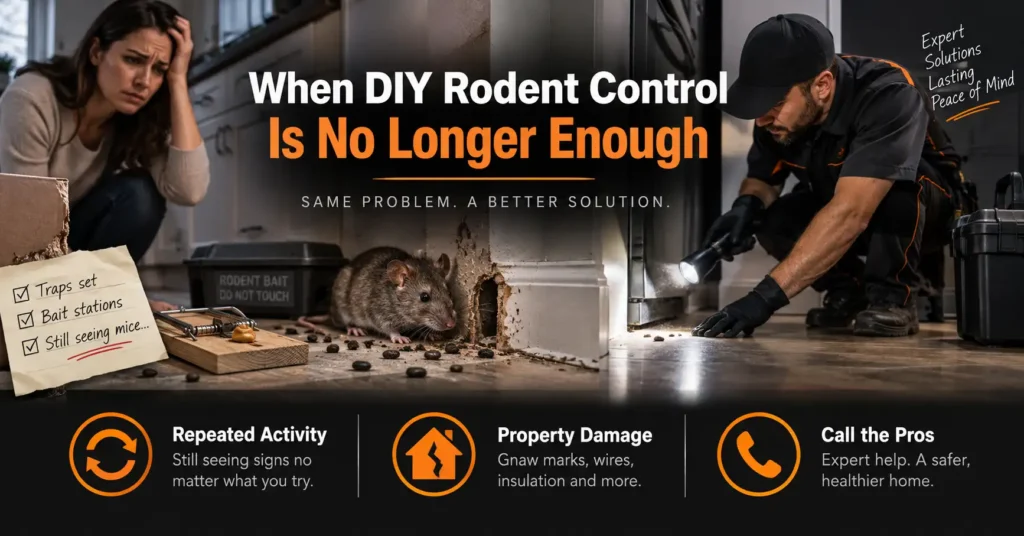
Store-bought traps can be useful, particularly when the infestation is small and rodent travel routes are known.
But trapping becomes less effective as a complete solution when you cannot identify where rodents are entering or nesting.
A larger problem may require inspection, strategic trapping or control measures, sanitation advice, and exclusion work.
The CDC states that professional assistance can be considered when trapping does not resolve an infestation and specifically recommends professional rodent removal when rodents have accessed HVAC systems.
This is why rodent removal services Illinois property owners hire should focus on the full problem rather than a single visible mouse or rat.
Why Rodent Exclusion Matters After Removal
Removing rodents is only one part of lasting control.
Exclusion means identifying openings rodents can use and taking steps to close those openings with suitable materials.
Common areas include gaps around utility lines, doors, foundations, crawl-space vents, attics, rooflines, pipe penetrations, and damaged exterior materials.
Because rodents can chew through some materials, repairs should use appropriate rodent-resistant materials where needed.
Food and water access should also be reduced. Store food in secure containers, clean spills promptly, avoid leaving pet food exposed overnight, and keep garbage properly contained.
These simple steps help make a property less attractive after the existing infestation has been addressed.
Illinois Winter Weather Can Push Mice Toward Buildings
Illinois weather gives this topic an important local angle.
As temperatures fall, buildings can provide rodents with protection, food, and warmth. Illinois Extension specifically notes that mice take advantage of buildings for shelter during cold Illinois winters.
That means homeowners should be especially alert during fall and winter.
Inspect garages, basements, attics, exterior doors, utility openings, and storage areas before cold conditions become severe.
Businesses should also inspect delivery areas, dumpsters, storage rooms, food areas, and exterior doors.
Seasonal prevention is usually easier than dealing with rodents once they have established nesting areas indoors.
When Does a Rodent Problem Become an Emergency?
Not every sighting is an emergency, but some situations need faster action.
Consider emergency rodent control Illinois services when rodent activity creates an immediate concern for health, food safety, important property systems, or normal business operations.
Examples include rodents moving through restaurant food areas, heavy contamination, extensive droppings, damage to electrical wiring, activity around sensitive equipment, or rodents entering occupied spaces repeatedly.
Heavy infestations also require greater care during cleanup. The CDC recommends additional protective measures for cleaning buildings with extensive rodent contamination.
Rodent Problems in Restaurants and Commercial Buildings
Commercial rodent activity can create different problems from a typical residential infestation.
Restaurants, grocery businesses, warehouses, apartment buildings, offices, and other commercial properties may provide rodents with large amounts of food, storage space, loading areas, dumpsters, utility pathways, and multiple entry points.
A mouse in a restaurant kitchen is not simply an inconvenience. Management needs to identify how the rodent entered, whether food or surfaces were contaminated, and whether more activity exists elsewhere.
Commercial properties may also require follow-up visits because activity can involve several parts of a large building.
Business owners should document sightings and droppings, protect food products, correct sanitation problems, and arrange inspection quickly rather than relying only on visible traps.
What Happens During a Professional Rodent Inspection?
A proper inspection should help answer several important questions.
Where are rodents entering? Where are they traveling? What areas provide food, water, or shelter? Is the activity caused mainly by mice, rats, or another animal? Are there structural gaps that need repair? Is the infestation isolated or spread across the property?
The technician may inspect the exterior foundation, roofline, garage, attic, basement, crawl space, utility openings, storage areas, kitchens, and places where evidence has been reported.
The recommendations should depend on what the inspection finds.
This process helps make When to Call a Rodent Exterminator in Illinois easier to answer: call when the source has become difficult to identify or control on your own.
Does Property Type Affect Rodent Control?
Yes. Every property presents different conditions.
A detached house may have attic, garage, foundation, crawl-space, and utility entry points. An apartment may involve shared walls or common utility pathways. A restaurant can have food storage and delivery areas. Warehouses may have large doors and numerous storage zones.
Older buildings may also contain more gaps or complicated access routes.
Because of these differences, there is no single rodent-control plan that suits every property.
Landlords and tenants should also communicate quickly when rodent activity is discovered. Renters should document the evidence and report structural gaps and rodent activity to the property owner or management. Responsibility can depend on the lease, cause of the problem, and applicable local requirements.
How Much Does Professional Rodent Control Cost?
Rodent-control costs can vary because infestations are not all the same.
The final price may depend on property size, infestation severity, species involved, number of treatment or monitoring visits, accessibility of nesting areas, sanitation conditions, and whether exclusion repairs are required.
A small mouse problem in one accessible room may require less work than rats moving through several areas of a commercial property.
Illinois homeowners looking at statewide pricing can read How Much Does Rodent Control Cost in Illinois?
For more location-specific information, see Rodent Control Cost in Hanover Park, IL.
The better question is not simply how much one visit costs. Ask what the proposed service includes, whether follow-up is required, and whether entry-point prevention forms part of the plan.
What Should You Do Before the Exterminator Arrives?
You can make the inspection more useful by preserving information about where activity has occurred.
Write down where you saw the rodent, heard scratching, found droppings, or noticed damaged food.
Avoid moving every item in the affected space before inspection because travel routes and nesting evidence can help identify the source.
Store food securely, keep children and pets away from contaminated areas, and photograph damage or droppings when useful.
Do not casually vacuum dry rodent droppings. Follow proper disinfection procedures when cleanup is necessary.
Most importantly, avoid sealing an interior hole without understanding where it leads. Rodent exclusion should be planned so the infestation is controlled without creating another problem inside the structure.
Why Follow-Up Matters After Rodent Treatment
A successful rodent plan does not always end with the first visit.
Follow-up can help determine whether trapping has stopped activity, whether new droppings have appeared, whether entry repairs remain secure, and whether new access points have developed.
After treatment, continue checking kitchens, pantries, basements, garages, attics, and other previous activity areas.
Keep food stored securely and outdoor garbage closed.
Rodent prevention works best when removal, sanitation, monitoring, and exclusion support each other.
When to Call a Rodent Exterminator in Illinois for Your Property
The safest time to respond to rodents is before a small problem becomes difficult to control.
You do not have to wait until mice are running through several rooms or rats are causing obvious property damage.
Repeated droppings, scratching inside walls, chewed materials, damaged wiring, nesting activity, strong odors, failed traps, and recurring sightings are all reasons to investigate further.
Knowing When to Call a Rodent Exterminator in Illinois is especially useful when you have already tried basic control and the problem keeps returning.
A professional inspection can help determine what type of rodent is present, where it is entering, and what conditions need to change to reduce the risk of another infestation.
If you are dealing with recurring rat or mouse activity, contact Perfect Pest Control LLC to discuss an inspection and a rodent-control plan for your Illinois home or business.
Frequently Asked Questions About Rodent Control in Illinois
1. Should I call an exterminator if I only see one mouse?
One indoor mouse sighting should be investigated rather than ignored. Check for fresh droppings, gnaw marks, scratching sounds, nesting material, damaged food packages, and possible entry points. If additional evidence appears or activity continues, an inspection can help determine whether more rodents are hidden inside.
2. How do I know whether my mouse problem is becoming serious?
Increasing droppings, activity in several rooms, regular nighttime scratching, repeated sightings, nesting material, strong odors, or mice returning after trapping are warning signs. These clues suggest that the issue may involve more than one isolated rodent.
3. How quickly should I call about a rat inside my home?
Contacting a professional promptly is reasonable when a rat is found indoors, particularly when there are droppings, food contamination, gnaw damage, or additional sightings. Fast inspection can help locate travel routes and possible entry points before activity spreads.
4. Can an exterminator stop mice from coming back?
Removal alone cannot guarantee prevention. Long-term control usually requires finding and addressing entry points, reducing food and water sources, removing rodents already inside, and monitoring for fresh activity. This combination is more effective than relying on traps alone.
5. Is rodent activity worse during winter in Illinois?
Mice can seek shelter inside buildings during cold Illinois weather. Homes and businesses provide warmth, nesting locations, and potential food sources. Fall and winter are therefore important times to inspect exterior openings, garages, attics, basements, and utility penetrations.
6. When should I stop trying DIY rodent control?
If traps have been used correctly but droppings, scratching, gnawing, or sightings continue, it may be time for professional help. You should also seek assistance when rodents are in inaccessible areas, HVAC systems, commercial food areas, or places where they are creating safety or property concerns.
Get Professional Help for a Recurring Rodent Problem
Rodent activity rarely becomes easier to manage after it has spread through a property. If you continue finding droppings, hearing scratching, seeing rats or mice, or discovering new damage after using traps, a professional inspection can help identify what DIY control may be missing.
Understanding When to Call a Rodent Exterminator in Illinois gives homeowners, landlords, property managers, and business owners a better chance to act before rodent activity leads to wider contamination or property damage.
Contact Perfect Pest Control LLC today to schedule an inspection and get help protecting your Illinois home or business from recurring rats and mice.