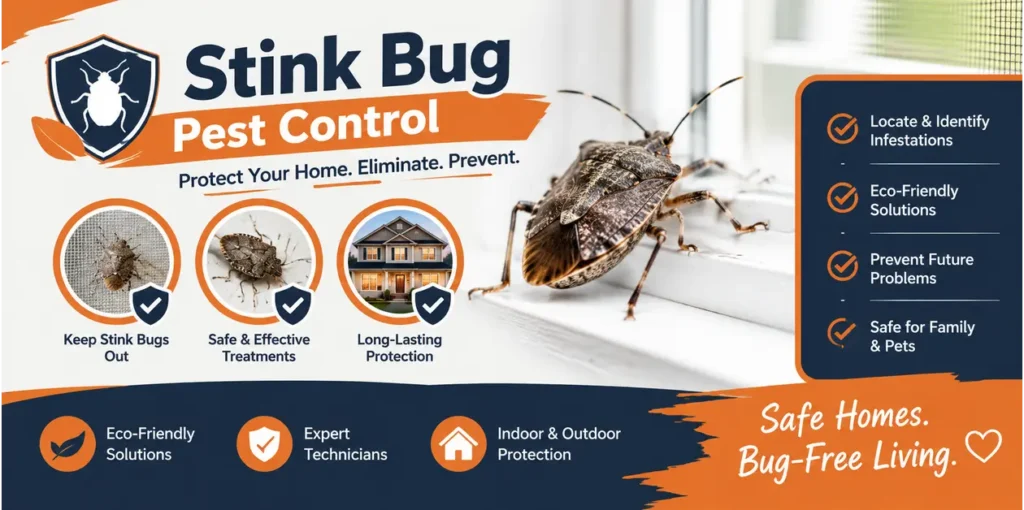
If you’ve ever opened a window on a warm fall afternoon and found a shield-shaped bug crawling along your curtains, you already know how frustrating a stink bug problem can be. These pests don’t bite, they don’t spread disease, and they don’t damage your furniture — but they show up in large numbers, they smell terrible when disturbed, and once they find a way inside, they’re hard to send back out. That’s why so many homeowners across the country turn to professional stink bug pest control instead of trying to handle an infestation on their own.
This guide walks through why stink bugs invade homes, how to spot an infestation early, what their life cycle looks like, and the most effective ways to remove and prevent them. Whether you’re dealing with a handful of bugs on your porch or a full-blown infestation in your attic, understanding the problem is the first step toward solving it.
What Attracts Stink Bugs to Your House?
Stink bugs are drawn indoors for one simple reason: shelter. As temperatures drop in late summer and early fall, these insects search for warm, protected places to spend the winter. Homes offer exactly what they’re looking for — cracks around windows and doors, gaps in siding, chimneys, vents, and any small opening that leads to a dry, insulated space.
The most common invader in the United States is the brown marmorated stink bug, an insect that originally arrived from Asia and has since spread to nearly every state. Unlike native stink bug species that tend to stay outdoors, the brown marmorated stink bug is notorious for gathering in massive numbers on the sunny sides of buildings before squeezing inside through the tiniest gaps. Homes near wooded areas, gardens, or fruit trees are especially attractive, since these bugs feed on a wide variety of plants before moving indoors for the colder months.
Light also plays a role. Stink bugs are attracted to bright exterior lighting at night, which is why porch lights and illuminated entryways often become gathering spots right before an infestation begins.
The Stink Bug Life Cycle
Understanding how these pests develop can make it much easier to time your prevention efforts. The stink bug life cycle begins in spring, when adults that survived the winter emerge and lay clusters of small, barrel-shaped eggs on the underside of leaves. Within a week or two, nymphs hatch and begin feeding on nearby plants. Over the summer, these nymphs molt several times, gradually growing larger and developing the shield-shaped body and wings that make adult stink bugs so recognizable.
By late summer, most stink bugs have reached adulthood, and this is when the search for winter shelter begins. A single generation typically completes its cycle within one growing season, though in warmer regions, two generations may occur in a single year. This is important to know because it means the bugs entering your home in October aren’t a one-time event — they’re part of a recurring seasonal pattern that will repeat unless the entry points and outdoor conditions are addressed.
Signs of a Stink Bug Infestation
Catching an infestation early can save a lot of frustration later on. Some of the clearest stink bug infestation signs to watch for around your home include:
- Bugs clustered near windows and doors, especially as the weather starts to cool down.
- Bugs congregating on sunny exterior walls, usually on the side of the house that gets the most afternoon light.
- A lingering unpleasant odor in a room without an obvious source, often a sign that a bug has been disturbed nearby.
- Bugs hiding in quiet corners, such as behind curtains, inside closets, or tucked into wall voids.
- Large numbers found in one area, particularly attics or unused rooms, which usually points to an established overwintering site rather than a few stray bugs.
If you notice several of these signs at once, it’s a good indication that the problem is more than just a handful of bugs wandering in by accident.
How to Get Rid of Stink Bugs at Home
Once stink bugs are inside, the goal is removal without triggering that signature odor. The most effective method for how to get rid of stink bugs is a simple one: use a vacuum with a disposable bag, gently suction the bugs up, and dispose of the bag outside right away. Avoid squishing or swatting them directly, since crushing releases the defensive scent that can linger on hands, fabric, and furniture.
For homeowners dealing with a handful of bugs, gently guiding them into a cup and releasing them outside works well too. But when the numbers grow, more structured approaches for stink bug removal at home become necessary. Sealing entry points, using targeted traps, and treating known gathering areas are all part of an effective long-term strategy.
It’s also worth remembering that DIY methods tend to treat the symptoms rather than the source. Store-bought sprays might kill the bugs you can see, but they rarely reach the ones hiding inside wall cavities or attic insulation, which is why many households eventually turn to professional stink bug extermination for lasting results.
Why You Shouldn’t Squish Stink Bugs
It’s tempting to reach for a shoe the moment you spot a stink bug on the wall, but this is one pest where that instinct works against you. Stink bugs release a defensive compound from glands on their body when they feel threatened or are physically crushed. The odor has been described as similar to cilantro gone bad or burnt rubber, and it doesn’t fade quickly — it can soak into carpet, upholstery, and curtains.
Beyond the smell, squishing stink bugs can also leave stains on walls, floors, and fabric that are difficult to clean. And because these insects often gather in groups, especially during overwintering, disturbing one can sometimes cause nearby bugs to release their scent as well. The better approach is always gentle removal, whether that’s vacuuming, trapping, or simply guiding the bug into a container and releasing it outdoors.
Stink Bug Prevention
Prevention is where homeowners get the most value for their effort, since keeping stink bugs out is far easier than removing them once they’ve settled in. A good starting point is a thorough inspection of your home’s exterior. Look for gaps around window and door frames, torn screens, unsealed utility penetrations, and cracks in siding or foundation walls. Caulking these openings before fall arrives can dramatically reduce the number of bugs that make it inside.
Other helpful stink bug prevention tips include repairing damaged window screens, installing door sweeps, and sealing gaps around chimneys and vents with fine mesh. Reducing exterior lighting at night, or switching to yellow-toned bulbs that are less attractive to insects, can also help keep bugs from gathering near entry points in the first place. Trimming back vegetation and tree branches that touch the house removes another easy pathway indoors.
Setting out stink bug traps near known entry points, such as windows, attic vents, or porch areas, can also help catch bugs before they make it further inside. These small habits, combined with a bit of seasonal awareness, form the foundation of good stink bug pest control long before an infestation has the chance to start.
If pest concerns extend beyond just stink bugs, homeowners often look into broader seasonal coverage as part of their prevention plan. Many local providers offer year-round Pest Control Illinois plans that address stink bugs alongside other common household invaders.
Stink Bug Control Services
While prevention and DIY removal help, they don’t always solve a persistent or large-scale infestation. Professional stink bug control services go beyond what a can of spray or a vacuum can achieve. Trained technicians know where stink bugs are most likely to hide, from attic insulation to wall voids, and use targeted treatments that address both the bugs already inside and the entry points allowing new ones in.
A professional approach typically includes a full inspection of the property, exterior treatments applied before peak season, and sealing recommendations tailored to your home’s specific vulnerabilities. This kind of comprehensive stink bug pest control is especially valuable for homes that have dealt with repeat infestations year after year, since it addresses the root cause rather than just the visible bugs.
Homes near wooded lots or open yards often deal with more than one seasonal pest at once. If ticks are a concern in addition to stink bugs, a dedicated Tick Control in Illinois program can help keep yards and outdoor spaces safer for the whole family.
And for households noticing more than just insects moving in as the weather cools, professional rodent removal services in Illinois can address mice and other rodents seeking the same warm shelter that attracts stink bugs in the first place.
Experience a Pest-Free Home. Choose Terminix.
Stink bugs may not bite or spread illness, but the smell, the sheer numbers, and the difficulty of keeping them out make them one of the more frustrating seasonal pests homeowners face. The good news is that with the right combination of prevention, careful removal, and professional support when needed, it’s entirely possible to keep your home clear of them season after season.
Terminix understands the habits of stink bugs and the other pests that try to move in alongside them. Rodent Removal Services in Illinois also help protect your property from rodents and other unwanted pests.
From sealing up entry points before fall arrives to treating existing infestations at the source, a trusted local team can help you stop the cycle before it starts again. If you’re ready to stop finding stink bugs on your windowsills and start enjoying a pest-free home, reach out to Terminix and let the experts handle it.
Frequently Asked Questions
Why do I suddenly have so many stink bugs in my house?
Stink bugs typically move indoors in large numbers during late summer and early fall as they search for warm places to spend the winter. If your home has gaps around windows, doors, or vents, it can become an easy target for these seasonal invaders.
Are stink bugs harmful to humans or pets?
No, stink bugs don’t bite, sting, or spread disease. Their main nuisance is the strong odor they release when threatened or crushed, along with the sheer number of bugs that can gather at once.
What smells do stink bugs hate?
Strong scents like mint, garlic, and clove are commonly believed to discourage stink bugs from lingering in an area, though sealing entry points remains the most reliable long-term solution.
Do stink bug traps really work?
Traps can help reduce the number of bugs indoors, especially when placed near known entry points, but they work best as part of a broader plan that includes sealing gaps and professional treatment for larger infestations.
When is stink bug season in the U.S.?
Stink bugs are most active indoors from late summer through early fall, as temperatures drop and they search for shelter. Many will remain hidden indoors throughout winter before becoming active again in spring.