Hearing scratching in the walls at night? Finding droppings in a kitchen drawer? These small clues often point to a bigger problem than one lost mouse. This guide explains the signs you need professional rodent removal in Illinois, why rodents move into homes, and when it is time to call an expert.
Quick answer: If you are asking what is a sign of rodent infestation, look for noises in the walls or ceiling, droppings, gnaw marks, grease smears, and nesting materials. Seeing a live rodent in the daytime is also a strong warning. The most common signs of a rodent infestation are easy to miss at first, but they get worse fast. Mice and rats breed quickly, so early action protects your home, your food, and your family’s health.
What Are the Common Signs of a Rodent Infestation?
Rodents are shy and active at night, so you may not see them for weeks. What you will see is the damage they leave behind. Any single sign of rodent infestation deserves a closer look, and two or more together usually mean the problem is real.
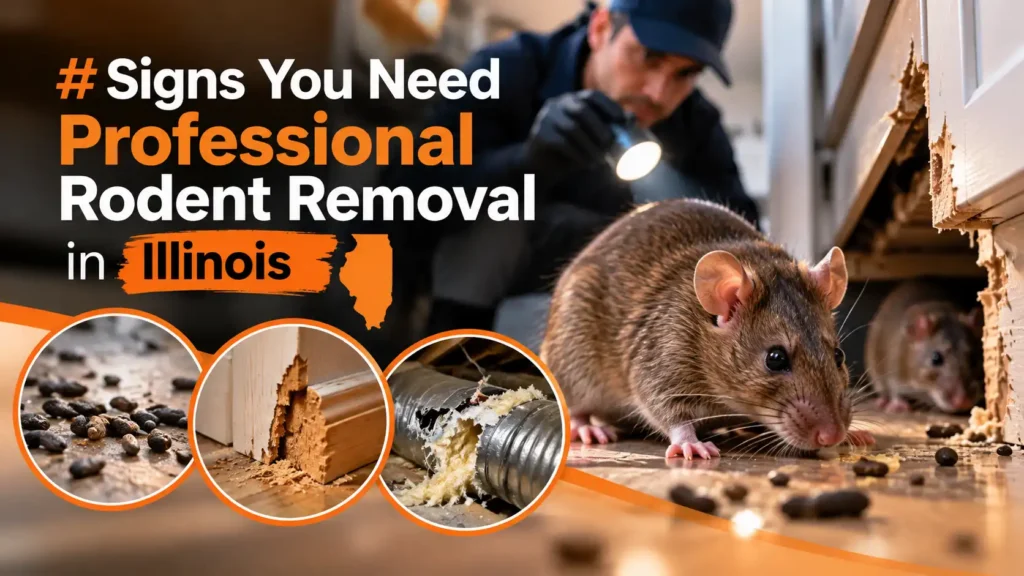
Noisy ceilings and walls. Scratching, scurrying, or squeaking in the attic, ceiling, or walls is often the first clue. These sounds are usually loudest at night, when mice and rats are most active.
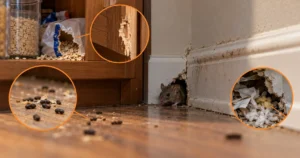
Droppings and urine stains. Mouse droppings are small and about the size of a grain of rice. Rat droppings are larger and rounded. Check along baseboards, under sinks, and inside kitchen pantries. Pest Control Illinois can help identify a strong, musty or ammonia-like odor that often comes with them.
Chewed wires and structural damage. Gnaw marks on wood, plastic, and electrical wiring are a serious warning. Chewed wires can create a fire hazard. You may also find torn or tunneled attic insulation.
Grease and rub marks. Rodents use the same paths again and again. Over time, the oils and dirt on their fur leave dark, oily smudges along baseboards and corners.
Daytime sightings. Seeing a live rodent during the day often means the population is large and hiding spaces are running out.
Nesting materials. Piles of shredded paper, fabric, dried plant matter, or insulation tucked into dark corners, basements, or crawlspaces point to a nest nearby.
People often search for what is a sign of a rodent infestation after hearing one odd noise. Noise, droppings, and damage all count, and together they paint the full picture.
Many homeowners ask what kind of animal they are dealing with. Mice, rats, and other pests differ in size, habits, and the damage they cause. Our guide to Common Types of Rodents explains how to tell them apart.
Small rodent problems rarely stay small. A single scout can turn into a hidden colony in a short time, which is why the first sign matters so much.
What Are the Signs of Mice in a House?

Mice are the most common rodent invaders in Illinois homes. They are small, quick, and good at staying out of sight, so you often spot the evidence before the animal.
The clearest signs of mice in house settings are fresh droppings, gnawed food packaging, and small chewed holes in boxes or bags. Check cereal boxes, pet food, and pantry shelves. Look for tiny tracks in dusty areas, and sniff for a stale, musty smell in cabinets and closets.
You may also notice the signs of mouse in house areas that people rarely check, such as behind the refrigerator, under the stove, and inside the garage. Mice like warm, quiet spots close to food. Pets can help you notice them too. A dog or cat that stares at a wall or sniffs at one spot may be sensing activity.
Finding just one mouse in a house can feel like a small thing. It usually is not. Mice multiply fast, so one sighting often means more are hiding nearby. The same is true for mice in a house that seem to disappear for days and then return. They are likely using hidden routes between their nest and your food.
How Can You Tell If Mice Are Living in Your Walls?
Walls give mice what they want: warmth, darkness, and safe travel routes. Because you cannot see inside, you have to rely on clues.
The most common signs of mice in walls are scratching, scurrying, or light squeaking that you hear at night. The sound often moves from one spot to another. You may also find droppings along the base of the wall, small gnaw marks near outlets or pipes, or greasy rub marks near gaps. A musty smell that gets stronger in one room can mean a nest is close, and a sudden bad odor may mean a mouse has died inside the wall.
Renters face their own challenges. The signs of mouse in apartment buildings are the same as in houses, but the cause may come from outside your unit. Mice travel through shared walls, pipes, and utility lines, so a neighbor’s problem can quickly become yours. If you see signs in an apartment, tell your landlord or property manager right away so the whole building can be checked.
Why Are There Mice in My House?
Many people ask, why are there mice in my house when it looks clean? The answer is usually simple. Mice come inside for three things: food, water, and shelter. Even a very clean home can offer all three.
Cold weather is a major trigger. When Illinois temperatures drop, mice look for warm places to nest. Open gaps around doors, pipes, vents, and the foundation give them an easy way in. They can squeeze through very small openings, so even tiny cracks matter.
Food and water make them stay. Crumbs, open pet food, bird seed, and overflowing trash all attract mice. Leaky pipes and standing water add to the appeal. Clutter in basements, attics, and garages gives them safe places to build nests.
Prevention starts with the same three steps professionals use: entry-point sealing, sanitation and food storage, and reducing food sources. Seal gaps and cracks, keep food in tight containers, and clean up spills fast. If you want a step-by-step plan, read How to Get Rid of Mice in Illinois.
Can Mice Damage Wood and Other Parts of Your Home?
Yes, mice cause real damage. But if you wonder do mice eat wood, the answer is not quite. Mice do not eat wood for food. They gnaw on it because their front teeth never stop growing, and chewing helps keep those teeth short.
That gnawing can still cause serious harm. Mice chew on wood beams, baseboards, drywall, plastic, insulation, and electrical wires. Chewed wiring is a fire risk, and damaged insulation can raise your heating costs. Droppings and urine can also soil insulation and stored items.
To understand what really draws mice into your home, it helps to learn their eating habits. Our guide on What Do Mice Eat covers the foods they prefer and how to store them safely.
Rats cause even bigger damage because they are larger and stronger. They can chew through pipes and tough materials. Whether you have mice or rats, acting early limits repair costs.
When Should You Call an Exterminator for Mice or Rats?
Not every sign means you need help right away. But waiting too long can make the problem harder and more expensive to fix. Here is a simple way to decide.
Ask yourself when to call an exterminator for mice, and the answer is as soon as you see clear signs of activity. This includes droppings, gnaw marks, nests, or repeated noises. The same rule applies to rats. Finding any of these means rodents are already living in your space.
People also ask when you should call an exterminator for mice if they have already tried traps. If traps and store-bought products have not stopped the activity within a short time, the source is likely still active. Professionals find entry points and nests you may not see.
If you are thinking of calling an exterminator for mice, consider the risks. Droppings and urine can spread illness, and rodents can contaminate food and surfaces. Hantavirus, salmonella, and rat-bite fever are among the diseases linked to rodents. Homes with children, older adults, or pets have even more reason to act quickly.
Here are the situations where you should call right away:
- You see a live rodent during the day.
- You find droppings or gnaw marks in the kitchen or pantry.
- You hear noises in the walls or ceiling every night.
- You notice chewed wires or a burning smell.
- Traps and DIY products have not worked.
If you are unsure, use this rule for when to call pest control: call at the first confirmed sign, not after the problem spreads. For a more detailed checklist, see When to Call a Rodent Exterminator in Illinois.
Cost is a common concern, and it depends on the size of the problem and the work needed. You can read about prices in Rodent Control Cost in Hanover if you live in that area. For a wider view across the state, see Rodent Control Cost in Illinois.
How Can Professional Rodent Removal Help?
Professional help does more than catch the animals you can see. A good plan solves the cause, not just the symptom. That is why many homeowners choose Rodent Removal Services in Illinois that cover inspection, treatment, and prevention together.
Inspection. A technician checks the attic, basement, kitchen, garage, and outside of the home. They look for droppings, gnaw marks, grease trails, and nests. They also find the entry points rodents use.
Entry-point sealing. Closing gaps and cracks stops new rodents from coming in. This step is the key to long-term results. Without it, new pests simply replace the old ones.
Trapping and removal. Mouse trapping and capturing mice reduces the current population. For larger problems, rat extermination and mouse extermination use targeted methods suited to the pest and the property. Mice infestation treatment and rat infestation treatment are planned around where the activity is found.
Sanitation and prevention advice. A technician can show you how to store food, reduce food sources, and clean up areas that attract pests. These small changes help keep rodents away after treatment.
Follow-up. Checking that activity has stopped confirms the work was effective. Managing rodent infestations works best when the process includes follow-up, not just a single visit.
You may also see the terms removal and control used as if they mean the same thing. They are related but different. Our page on Rodent Removal vs Rodent Control in Illinois explains how removal focuses on current rodents while control focuses on long-term prevention.
The same approach works for homes, apartments, and businesses. If you run a restaurant, a restaurant exterminator can protect food areas and help you stay ahead of inspections. Rodent control in any setting works best when it is steady and preventive.
Perfect Pest Control LLC helps Illinois property owners find the cause of rodent activity and stop it from returning. If you want a broader look at our local services, visit Pest Control Illinois.
Frequently Asked Questions
How fast do mice and rats multiply?
Mice and rats breed quickly. A small group can grow into a large colony in a short time, which is why early action matters.
Are rodents dangerous to my family?
They can be. Droppings, urine, and contaminated food can spread diseases such as Hantavirus, salmonella, and rat-bite fever. Children, older adults, and people with health problems should take extra care.
Can I remove rodents myself?
Traps and repellents may help with a very small, new problem. But DIY products often fail when the source is not found. If you see repeated signs, a professional inspection is the safer choice.
What happens during a rodent inspection?
A technician checks inside and outside your property for droppings, gnaw marks, nests, and entry points. They then recommend a plan that fits your home.
Does professional rodent removal include sealing entry points?
Good rodent removal includes entry-point sealing, because blocking gaps keeps new rodents out. Removing animals without sealing often leads to repeat problems.
How do I keep rodents out after treatment?
Seal cracks, store food in tight containers, take out trash often, and keep clutter low in basements, attics, and garages. Regular checks help you catch small problems early.
Get Help With Rodent Problems in Illinois
If you have noticed noises, droppings, gnaw marks, or any other warning sign, do not wait. Rodents do not go away on their own, and the damage grows with time. Contact Perfect Pest Control LLC to schedule an inspection and get a clear plan to protect your home.