

Yes, bed bugs can travel from room to room. They crawl across floors, move through small openings, and hitch rides on clothing, bedding, furniture, and personal belongings. A problem that starts in one bedroom can eventually reach other areas of a home or apartment.
For Illinois homeowners and renters, understanding how bed bugs spread is important for preventing a larger infestation. Moving to another bedroom or carrying infested items around the house can make the situation harder to control. This guide explains how bed bugs move, how to recognize their activity, and what you can do to stop them from spreading.
How Do Bed Bugs Spread From Room to Room?
Bed bugs are small, wingless insects that feed on human blood. They cannot fly or jump, but they can crawl and travel on objects. Although they usually stay close to places where people sleep or rest, they may move into other rooms when conditions change. Understanding how do bed bugs spread from room to room starts with two main methods: crawling independently and being carried from one location to another.
Crawling Through Doorways, Floors, and Wall Gaps
Bed bugs can move across bedroom floors, along baseboards, and through openings around walls and door frames. Their flat bodies allow them to enter narrow spaces that homeowners may overlook during routine cleaning.
They may also move through gaps around pipes, electrical wiring, and other building openings. This is especially important in apartments, where neighboring rooms or units can share walls and structural spaces. A closed bedroom door does not create a reliable barrier. Bed bugs may still find small openings or reach other areas through belongings moved between rooms.
Hitchhiking on Clothes, Bedding, and Furniture
Another common way bed bugs spread is by traveling on objects. They may hide in the folds of blankets, the seams of upholstered furniture, or bags placed near infested beds.
When someone carries these items into another room, hidden insects can move with them. This is why can bed bugs spread through clothing is an important concern for households dealing with an infestation.
Bed bugs generally do not live on people like lice, but they can temporarily hitchhike on clothing and other belongings. Keeping potentially infested items contained helps reduce the risk of moving them elsewhere.
If you want to understand how an infestation first enters a property, read our guide on What Causes Bed Bugs in Illinois Homes. It explains common ways these pests enter residential spaces.
How Fast Can Bed Bugs Spread Through a House?
There is no fixed timeline for how fast do bed bugs spread from room to room. Some infestations remain concentrated around one sleeping area for a period, while others spread farther as insects multiply or get carried through the home.
The speed of spread depends on several factors, including the size of the infestation, movement of personal belongings, available hiding places, and how quickly the problem is identified.
What Causes Bed Bugs to Move Into Other Rooms?
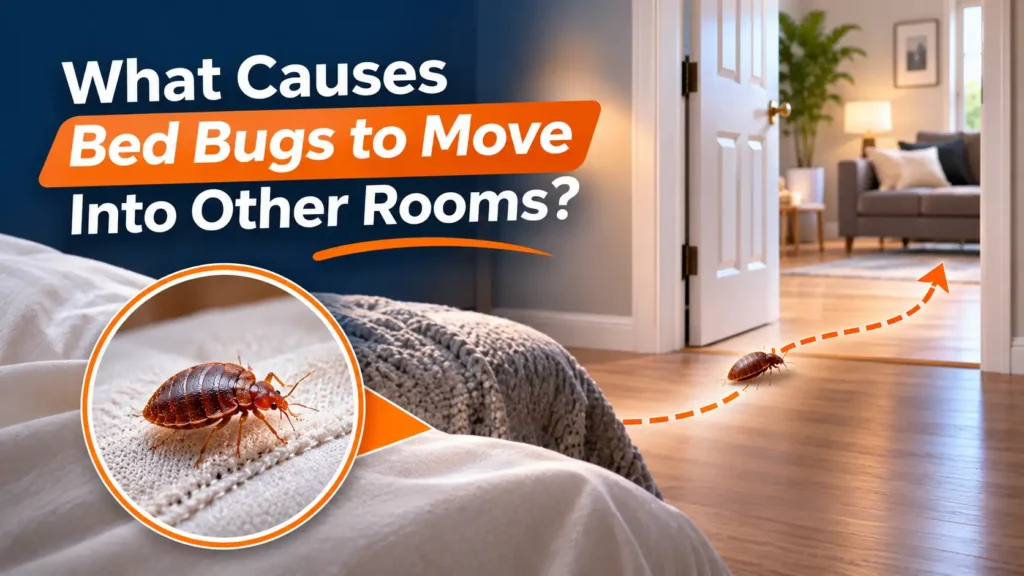
Bed bugs are attracted to hosts through cues such as body heat and carbon dioxide. They usually hide near places where people regularly sleep or spend long periods resting.
If someone begins sleeping in another bedroom, the insects may eventually find that person. However, moving to another room does not guarantee that they will follow. Increased infestation size can also lead to bed bugs occupying additional hiding places. Furniture movement, shared sleeping areas, and untreated infested belongings can introduce them into new locations.
Can a Small Infestation Spread to the Whole House?
Yes. Even an infestation that appears limited to one bed can become a larger household problem if it is not addressed.
Female bed bugs can lay eggs in protected hiding places. As young insects develop, the population may increase and occupy additional areas. However, finding one insect does not automatically mean every room is infested.
Early inspection is useful because small populations can be difficult to locate. If you are unsure what you have found, our article on How to Identify Bed Bugs in Your Illinois Home explains the physical characteristics that help distinguish bed bugs from other household insects.
Can Bed Bugs Travel Through Walls and Under Doors?
Yes, can bed bugs travel through walls is a reasonable concern, particularly in buildings with shared walls. They do not chew through solid walls, but they can use existing cracks, gaps, and openings to travel between connected spaces.
Their movement depends on the building’s structure, available routes, and nearby hosts. Not every wall or doorway provides an accessible passage.
Movement Through Cracks, Baseboards, and Wall Openings
Small gaps around baseboards, loose trim, wall penetrations, and door frames may provide routes for bed bugs. Homeowners also ask, can bed bugs crawl under doors? They can move beneath doors when sufficient space exists. A tight-fitting door may reduce one possible route, but it cannot prevent insects from moving through other openings or on belongings. Sealing accessible cracks can help reduce hiding places and movement routes. However, sealing alone will not eliminate insects already established inside furniture or other protected areas.
How Bed Bugs Spread Between Apartments
Bed bugs spreading between apartments can be especially challenging because neighboring units may share walls, utility openings, hallways, and other connected spaces. In a multi-unit building, an infestation may require inspection beyond the apartment where insects were first discovered. Nearby units, including those above or below, may need attention depending on the building and inspection findings.
Illinois renters should report suspected activity to their landlord or property manager promptly and document what they find. A coordinated response can help avoid repeated movement between connected apartments.
Professional Pest Control Illinois services may be helpful when an infestation involves shared spaces or multiple living areas. The appropriate inspection and treatment plan depends on the property and extent of activity.
How Can You Tell if Bed Bugs Have Spread to Another Room?
Discovering bed bugs in one bedroom does not mean every room contains them. However, checking nearby sleeping and resting areas is important because early signs can be easy to miss. You should look for physical evidence rather than relying only on unexplained skin irritation. Other insects and skin conditions can produce similar symptoms.
Signs to Check in Bedrooms and Living Rooms
Possible signs of bed bugs in multiple rooms include live insects, shed skins, tiny pale eggs, and dark fecal spots near furniture seams. Small reddish stains on bedding can also be a clue, although they do not confirm an infestation by themselves. Finding several types of evidence in the same area provides a stronger reason to investigate.
Some people notice itchy skin marks after sleeping. However, these reactions vary widely, and some individuals do not react visibly at all. For more information about skin symptoms, see What Do Bed Bug Bites Look Like?. The guide explains why bite appearance alone cannot reliably identify the insect responsible.
Where to Inspect Beds, Couches, and Nearby Furniture
Begin with areas where people regularly sleep or rest. Carefully examine mattress seams, bed frames, headboards, box springs, sofa cushions, and upholstered chair joints. Next, inspect accessible areas around baseboards, bedside furniture, and the edges of carpets. A flashlight can help reveal insects or dark spotting inside narrow spaces. Avoid carrying furniture from room to room while inspecting. If you suspect an item is infested, keep it in place until you have a plan to contain or treat it.
Because these insects spend much of their time hidden, our article Where Do Bed Bugs Hide During the Day in Illinois Homes? provides additional guidance on locations worth checking.
How to Stop Bed Bugs From Spreading to Other Rooms
Learning how to stop bed bugs from spreading is important as soon as activity is suspected. The goal is to reduce movement, protect unaffected belongings, and determine the full extent of the problem. The following steps can help, but they may not eliminate an established infestation without additional treatment.
Keep Belongings in the Affected Room
Avoid carrying potentially infested blankets, pillows, clothing, and furniture into clean rooms. Moving objects without inspecting or containing them can accidentally transport hidden insects. Do not immediately throw away your mattress or sofa. Many items can be treated, and careless disposal may spread bed bugs through hallways or shared spaces.
If an object must be removed, contain it properly and follow local disposal requirements. Untreatable furniture should be clearly marked to discourage others from taking it home.
Bag and Heat-Dry Bedding and Clothing Safely
Place potentially infested washable items directly into sealed bags before transporting them to the laundry area. Avoid shaking bedding or sorting loose clothing in unaffected rooms.
For dryer-safe items, the U.S. Environmental Protection Agency recommends a high-heat dryer cycle for 30 minutes to kill bed bugs and eggs. Washing alone may not be sufficient. Always follow fabric-care instructions, and do not expose heat-sensitive belongings to damaging temperatures. After treatment, place clean items in fresh sealed bags or containers until the infestation is controlled.
Use Mattress Encasements and Bed Bug Interceptors
Bed-bug-resistant mattress and box spring encasements can help trap insects already inside and reduce accessible hiding places. Choose properly fitted products designed for bed bug protection. Interceptor devices placed beneath bed or furniture legs can help catch moving insects and monitor activity. They are especially useful when the bed is positioned away from walls and bedding does not touch the floor. These tools support monitoring and containment, but they do not replace a complete treatment plan.
Reduce Clutter and Monitor Nearby Rooms
Clutter creates additional places for bed bugs to hide and makes inspection more difficult. Reduce unnecessary items carefully without carrying untreated belongings into clean spaces.
Vacuum accessible mattress seams, furniture joints, baseboards, and floor edges. Empty or seal the vacuum contents immediately and dispose of them outdoors. Inspect neighboring bedrooms and common resting areas regularly. Record where you find insects or other evidence, including the date and location.
For a more detailed look at possible hiding areas, visit Where Do Bed Bugs Hide in Illinois Homes?. Knowing where to inspect can help you recognize activity before it becomes widespread.
Common Mistakes That Can Spread Bed Bugs
Some actions taken in a hurry can make an infestation more difficult to manage. Understanding these mistakes can help protect the rest of your home.
Moving to Another Bedroom to Sleep
Sleeping in another room may seem like the easiest way to escape bed bugs. However, moving your bedding or belongings can carry insects into the new location. Bed bugs may also eventually move toward occupied sleeping areas. For this reason, changing bedrooms is not a reliable way to eliminate exposure or contain an infestation. Ask a qualified pest professional how to manage sleeping arrangements during inspection and treatment, especially if health or safety concerns make the original room unsuitable.
Carrying Unsealed Laundry or Furniture Between Rooms
Transporting unsealed laundry can introduce insects into closets, hallways, or other bedrooms. Similarly, moving an infested couch from the living room into a garage does not necessarily solve the problem. Insects may remain inside the furniture or fall off during transportation. Use sealed containers or bags when moving items for treatment. Keep treated belongings separate from objects that have not yet been inspected.
Using Bed Bug Sprays or Foggers Incorrectly
Random spraying and excessive pesticide use may expose residents to unnecessary hazards without reaching insects hidden deep inside furniture and cracks.
Foggers, sometimes called bug bombs, cannot reliably reach every protected hiding place and should not be the only control method.
Never use rubbing alcohol, gasoline, kerosene, outdoor pesticides, or unapproved chemicals to treat bedding or furniture. These practices can create serious health and fire risks. Use only EPA-registered products labeled for bed bugs, and follow all label directions. Professional advice is particularly valuable when the infestation has moved beyond one room.
Should You Treat One Room or the Whole House for Bed Bugs?
Finding bed bugs in one bedroom raises an important question: should the entire house receive treatment? The answer depends on inspection results, not simply the number of rooms in the property. Some infestations are concentrated in one area, while others involve several bedrooms or shared spaces.
When Inspection of Nearby Rooms Is Necessary
If bed bugs are confirmed in one bedroom, adjoining rooms and other frequently occupied areas should be checked.
Inspection becomes especially important when residents have moved between bedrooms, shared furniture, or carried potentially infested belongings throughout the house. A professional may examine beds, furniture, cracks, and other likely hiding locations to determine where treatment is needed.
Treating only one visible location without checking connected spaces can leave an infestation unresolved.
When Professional Bed Bug Control Makes Sense
Professional assistance is worth considering when you find repeated activity, insects in multiple rooms, or signs that continue despite careful cleaning and containment.
An inspection can help establish whether the problem is limited or widespread. Depending on the findings, treatment may involve targeted applications, heat-based methods, physical controls, or a combination of techniques. For Illinois residents facing ongoing activity, Bed Bug Control Services in Illinois from Perfect Pest Control LLC provide an option for discussing inspection and treatment needs. A suitable plan should address affected areas, preparation requirements, and follow-up monitoring rather than relying only on a single visible insect or stain.
Bed Bug Spread in Illinois Homes and Apartments
Bed bugs can affect houses, rental properties, apartments, and other buildings throughout Illinois. They do not require dirty living conditions, and ordinary household cleaning alone cannot reliably prevent every infestation. In apartments around Chicago and its suburbs, connected rooms and shared building features can make coordinated inspection particularly important.
Residents should avoid moving untreated furniture into hallways or shared storage areas. If activity is suspected in a rental unit, notify property management and ask about appropriate inspection procedures. For homeowners, early attention to nearby bedrooms and living spaces can help define the problem before more belongings are affected.
Even after control measures are completed, continued monitoring matters. Our guide Can Bed Bugs Come Back After Treatment explains why surviving insects, missed areas, or new introductions can sometimes lead to renewed activity.
Frequently Asked Questions About Bed Bugs Moving Between Rooms
1. Can Bed Bugs Move From One Bedroom to Another?
Yes. Bed bugs can crawl between connected areas or travel on clothing, bedding, and furniture. They often remain near sleeping places, but they are not restricted to a single bedroom. Inspect other resting areas if you confirm activity in one room.
2. Can Bed Bugs Follow You to Another Room?
They may eventually reach another room where someone regularly sleeps. Body heat and carbon dioxide help bed bugs locate hosts. However, they do not follow people in the same way as a pet. Moving infested belongings can also introduce them into a different room.
3. Can Bed Bugs Spread Through Shared Walls?
Yes. In apartments and other connected buildings, bed bugs may travel through existing gaps around pipes, wiring, baseboards, and structural openings. They cannot chew through solid walls. When activity is confirmed in a multi-unit property, neighboring areas may need inspection.
4. Will Keeping the Bedroom Door Closed Stop Bed Bugs?
No. Closing a door may block one direct path, but it does not reliably prevent movement through small gaps or on personal belongings. Proper inspection, containment, and treatment are more dependable approaches.
5. Can Bed Bugs Spread When You Move Furniture?
Yes. Bed bugs and their eggs can remain hidden in upholstered furniture, bed frames, and other belongings. Moving an infested item without proper containment can introduce insects into another room. Inspect furniture carefully before relocating it.
6. Do Bed Bugs Stay in One Room if Nobody Sleeps There?
Not necessarily. Bed bugs can survive for extended periods without feeding, depending on temperature and other conditions. Some may remain hidden, while others may move toward occupied areas. Leaving a room empty is not a dependable way to eliminate an infestation.
7. Can Bed Bugs Spread From a Couch to a Bedroom?
Yes. Bed bugs can establish themselves around couches and recliners where people rest for long periods. They may then spread through crawling or through blankets, cushions, and other moved belongings. Both the couch and nearby sleeping areas should be considered during inspection.
8. How Do You Know When Bed Bugs Are No Longer Spreading?
Regular inspections and monitoring devices can help evaluate progress. A sustained absence of live insects, fresh fecal marks, and other activity is encouraging, but it does not immediately prove elimination. Continue monitoring according to the treatment plan and follow-up guidance.
Concerned About Bed Bugs Spreading in Your Illinois Home?
A bed bug problem can become harder to manage when insects move between bedrooms, living rooms, and other shared spaces. Early inspection and careful handling of belongings can help limit further spread.
Perfect Pest Control LLC helps Illinois homeowners and property owners address pest concerns through professional inspection and treatment services. If you have found bed bugs in more than one room or are unsure how far an infestation has spread, contact our team to discuss the next steps.
Call Perfect Pest Control LLC at (630) 447-9777 to ask about bed bug inspection and available treatment options for your property.